
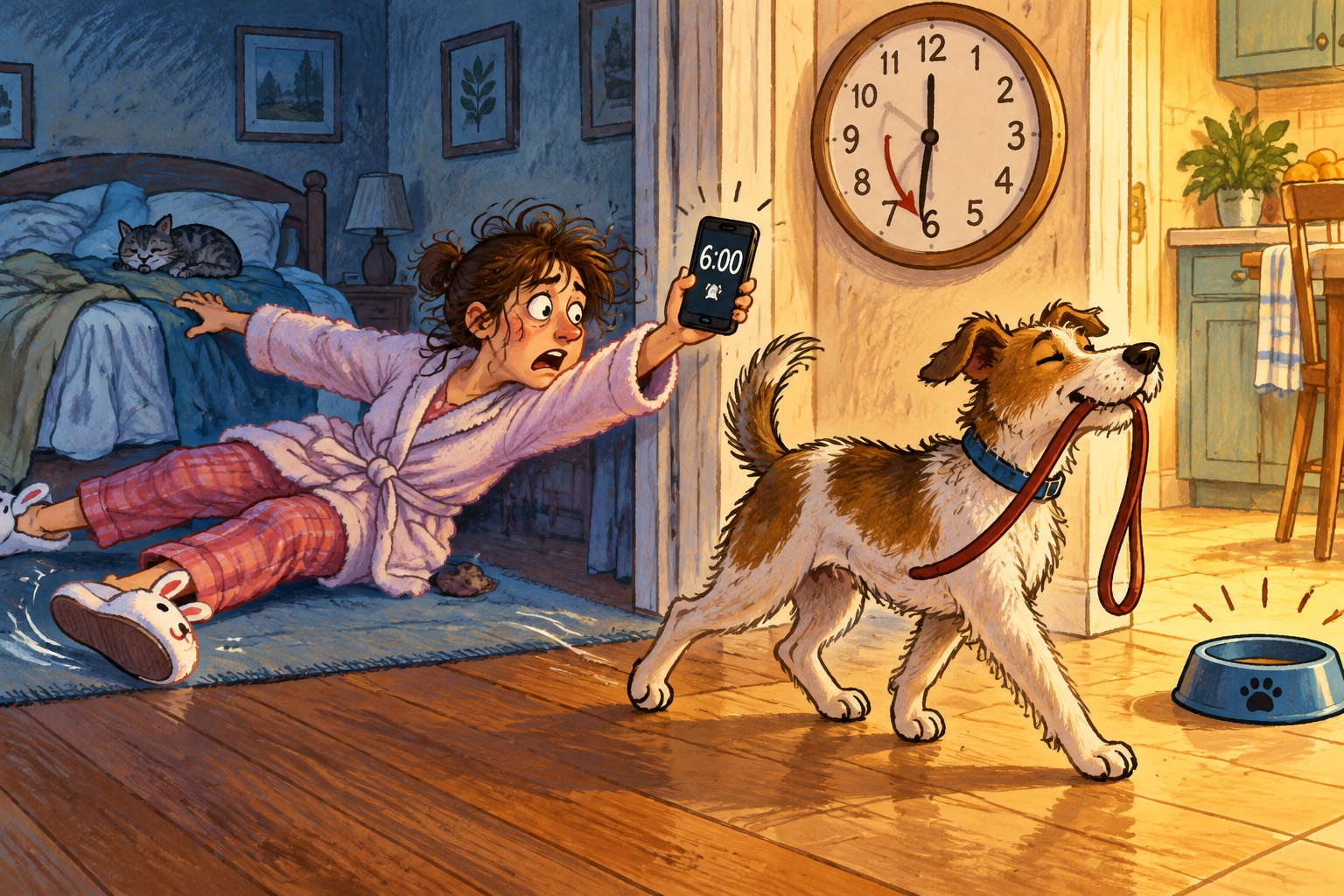
At 6 a.m. by the new clock, your dog is already giving you the look usually reserved for a dinner that is unforgivably late. You check the time. Your dog checks your face. The clocks changed; apparently the household contract did not.
Somewhere between the empty bowl and the full-body sigh, daylight saving time becomes a private negotiation between one person with a phone and one dog with excellent punctuality—and no interest in government timekeeping.
The good news: you do not have to turn the week into a minute-by-minute retraining project. You can ease a few routines toward the new clock, follow the new clock from the start, or leave a comfortable routine alone and see how things go. The useful plan is the one your household can actually follow.
First, which clock change are we talking about? 🕰️
For readers planning ahead in 2026, clocks go back in the UK on October 25. In the United States, the change is November 1. The dates are different, so check your local calendar rather than assuming a dog-owner friend on another continent is having the same breakfast debate this weekend.
Not every country observes daylight saving time, and not every US location changes its clocks. If your clocks do not change, there is no clock-change routine to fix. If they do, the hour on the display moves back; your dog’s familiar sequence of alarm, shoes, leash, breakfast and outside time may not feel like it moved with it.
Dogs and households vary. There is no universal adjustment timetable, and no need to assume every dog will react the same way. Your own routine—and the dog currently looking at you as if you personally misplaced an hour—is a better guide than an imaginary stopwatch.
Pick a plan, not a perfect timetable 🐾
You have two perfectly reasonable routes. Choose the one that feels least complicated.
- Keep it simple: Follow the new clock from the start. Offer meals, walks and bedtime at the times that work in your day, keeping familiar cues and the general order of events as steady as you can.
- Ease into it: If the old timing matters to your dog or your household, move one or two routine anchors later by clock time in small, manageable steps before or after the clocks change. For instance, you might shift a meal or walk by a little at a time over several days. It is an example, not a required schedule.
Because this is a fall clock change, the clock moves back. If you are gradually preparing for the same displayed time after the change, moving an activity later by clock time beforehand can help. You do not need to complete a full hour’s shift in advance: see how your dog and your real schedule are doing, then decide whether to keep adjusting.
Those are options, not competing schools of dog ownership. If your work shift starts when it starts, you have not failed a secret canine-routine exam by moving breakfast straight to the new-clock time. And if your dog is already eating, walking and settling comfortably, there may be nothing to adjust. A clock change is not a summons to reorganize a perfectly functional household.
Move only the anchors that matter
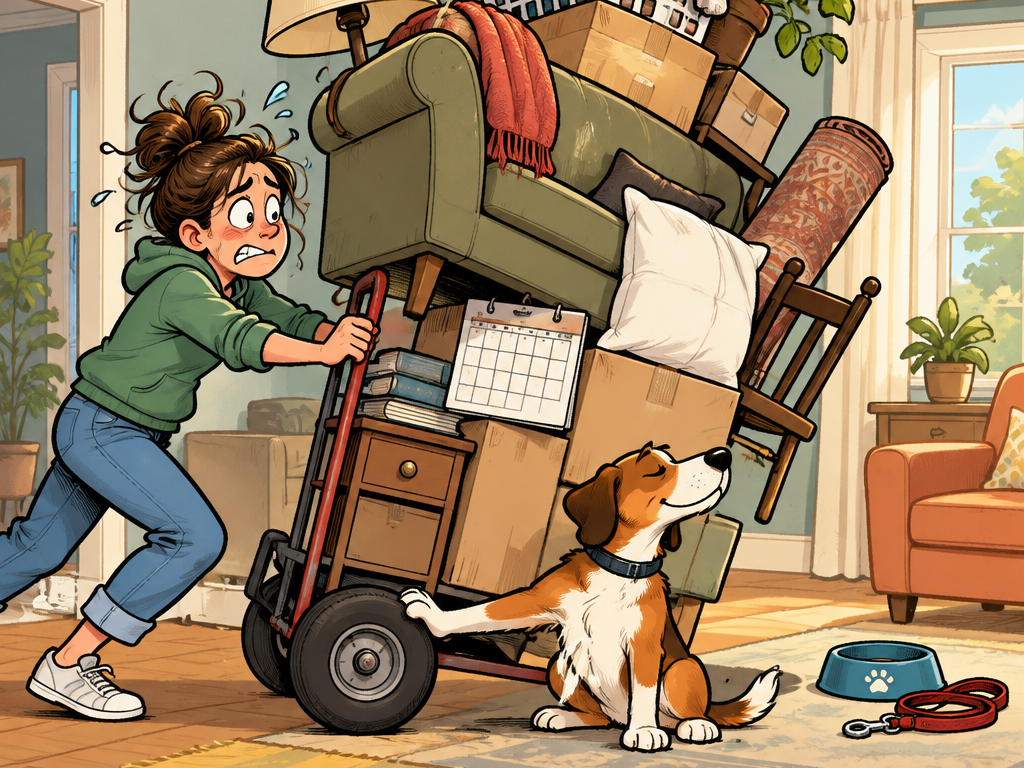
It is tempting to move everything: breakfast, lunch, the long walk, the short walk, the evening sniff, the last trip outside, lights-out, and the precise moment the sofa becomes available. You do not have to.
Pick the one or two points that shape your day most. For one household, that might be the early walk before work and the meal that follows. For another, it is the last trip outside before bed. A dog who is happy with a flexible lunchtime stroll does not need that walk added to the planning committee.
You can shift one anchor while keeping the rest of the day familiar, or move a meal and walk together if that is easier to remember. Keep an eye on how your dog is doing and let practicality have a vote. The aim is a workable routine, not a perfectly executed chart.
What can stay the same?
- The same breakfast place, bowl and familiar cue.
- The usual shoes-and-leash sequence before a walk.
- A calm wind-down routine in the evening.
- The parts of the day that are already flexible and working just fine.
- The routine you have time and energy to maintain on an ordinary Tuesday.
Sometimes the most useful adjustment is not changing the routine itself, but keeping its familiar shape while the displayed time changes.
One workday, two possible plans
Imagine a household with a fixed work start, a dog who expects an early walk, and weekends that already drift later. On weekdays, the walk is the big anchor: everyone needs to get out, get back and get to work. Breakfast follows. On Saturday, the dog may get an extra snooze while the humans negotiate coffee.
If there is room in the days around the change, this household could move the walk and breakfast later by small steps, then see how much further—if any—they want to adjust. If there is no room, they can use the new clock on Monday and keep the familiar sequence: shoes, leash, walk, breakfast, work. The steps remain recognizable even when the clock says a different hour.
Now picture a school-run household: the school bell is the immovable anchor, so the walk flexes around it. For a shift worker, the meaningful cue might be the person coming home rather than a standard morning hour. In a multi-dog home, one dog may be ready for breakfast while another is still contemplating existence. Separate meal routines can stay separate; the clock change does not require every dog to synchronize like a tiny furry choir.
And then the weekend arrives. Everyone sleeps later, and the dog accepts this as the plan they proposed all along. A routine does not have to be identical every day to be useful. Aim for a pattern your dog can live with and your household can sustain—not a vow to wake at the same minute forever.
When the dog starts campaigning before the alarm 😄
There may be a dawn patrol: a nose near the pillow, a polite paw, then a stare suggesting the kitchen has been closed for weeks. If your dog asks early, keep your response as calm and consistent as your real morning allows. You do not have to make every pre-alarm campaign an immediate breakfast bell if that is not the routine you want.
Some dogs settle back down; others make their case with the quiet persistence of a very small union representative. A familiar cue, a predictable first outing and an ordinary meal routine may help the morning feel less like a household emergency. You do not need to explain the legislation. The empty-bowl stare has already been entered into the record.
If you cannot shift gradually, keep the basics predictable where you can: use familiar cues, follow a sensible order, and fit meals, walks and outside breaks around your actual schedule. That is a plan. It does not have to look elegant on paper.
And if your weekend schedule bends again, do not be surprised if your dog treats the later breakfast as a sensible new policy. Dogs are not responsible for maintaining your calendar. You are allowed to be flexible, too.
Keep the routine guide in its lane
This is general help for ordinary household routines, not a reason to change a medication schedule. Do not adjust medication timing based on this guide. If your dog takes medication, ask your veterinarian how to handle the clock change and any timing questions for that specific prescription.
For everyday meals and walks, use your dog and your real-life constraints as your guide. If you are concerned about a change in your dog’s wellbeing, contact your veterinarian rather than assuming the clock is the explanation.
Your saveable clock-change checklist ✅
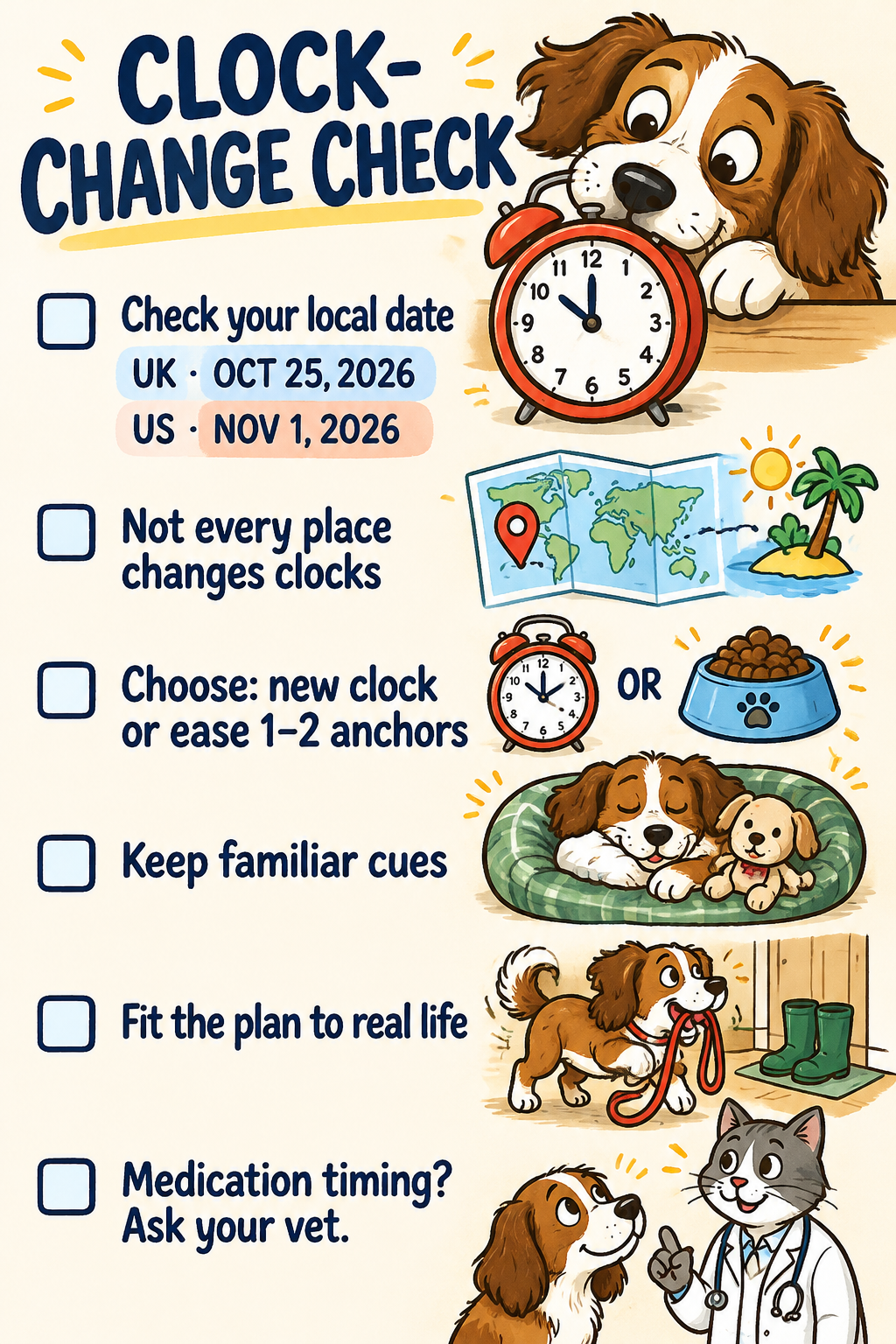
- Check your local date and rules: UK, October 25, 2026; US, November 1, 2026. Not every country or US location changes clocks.
- Choose your approach: follow the new clock, or ease one or two anchors later by clock time in manageable steps.
- Keep familiar cues and the parts of the day that already work.
- Make the plan fit work shifts, school runs, weekends and the actual dog in front of you.
- Leave medication timing out of the plan unless your veterinarian advises you otherwise.
The clocks can move an hour in the night. By breakfast, the bowl will still be where it always is, the leash will still be by the door, and your dog will still be keeping excellent time—just not the kind that comes with a government announcement. 🐶


Leave a Reply
You must be logged in to post a comment.