


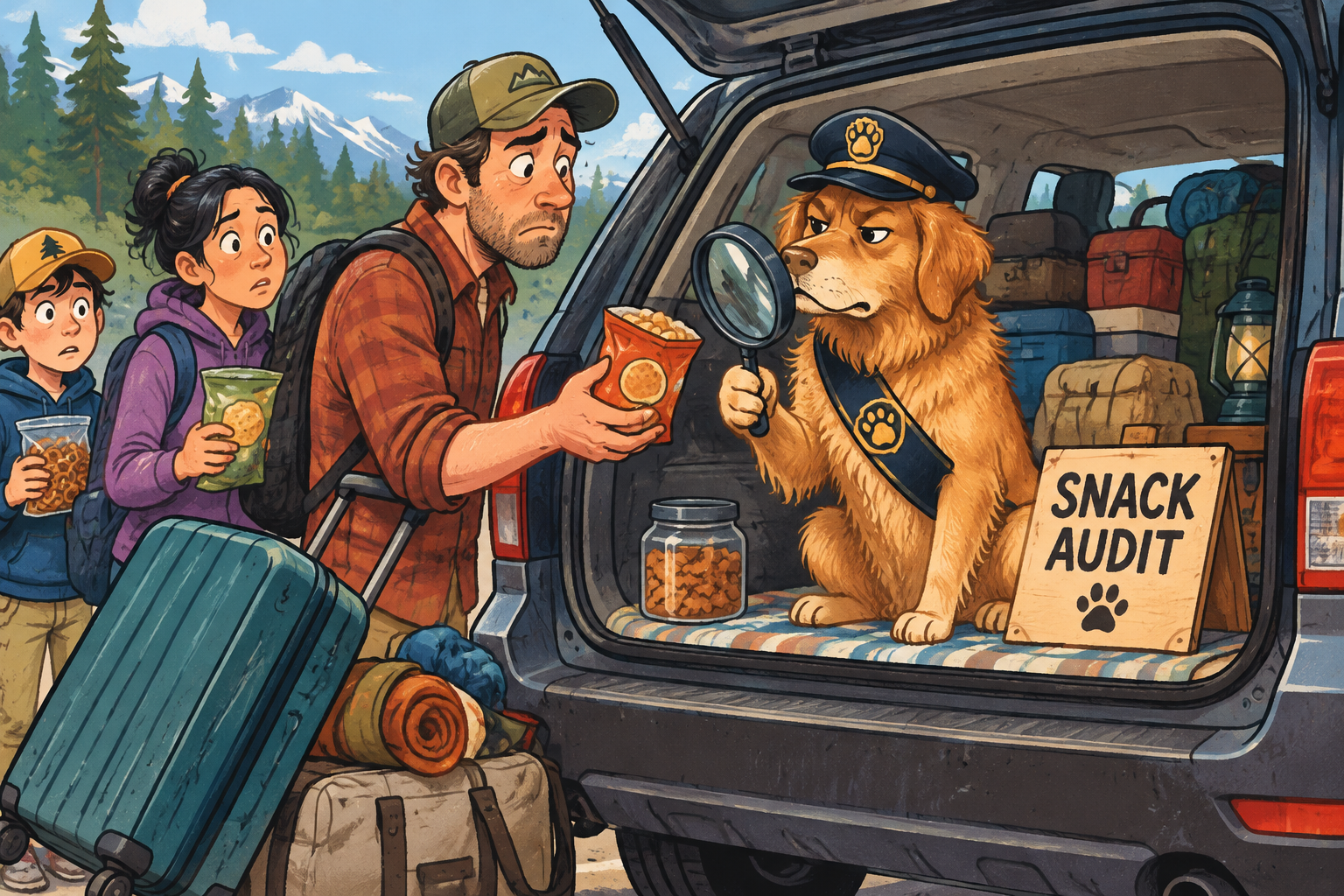
The invitation says, “Bring everyone!” Your dog hears this as a promise of snacks, new smells and possibly a sofa. You hear it as a question involving travel rules, sleeping arrangements and whether the dog can attend dinner without supervising every plate.
Before you book, compare the trip you’re actually taking with the care you can actually arrange. A scenic drive with one overnight is a different puzzle from a multi-stop visit where the dog would spend long stretches waiting in unfamiliar places. And “dogs are welcome” doesn’t automatically mean this particular itinerary will work for this particular dog.
There are three sensible routes: bring your dog, arrange care, or adjust the trip. None wins a medal for being the most picturesque. The best choice is the one you can confirm, manage and feel reasonably good about.
Start with the real itinerary—not the holiday postcard 🧳
Write down the trip as it is likely to happen, including the bits that never make the family photo. How long will you be away? How many stops are planned? Where will you sleep? What will the dog do during meals, visits or activities where they cannot come along? Who is responsible for them when the group scatters to “just pop out for a bit”?
The fantasy itinerary: scenic drive, leisurely lunch, charming inn. The real itinerary: three stops, a full car, a late check-in and a dog who has appointed themself head of the snack department. Planning for the second version is kinder to everyone.
A short overnight may mean checking the lodging rules and making a manageable plan for a few hours apart. A longer, multi-stop trip adds more questions: whether every place allows dogs, how the travel days will work, and whether you can keep up the dog’s ordinary care along the way. There is no universal trip length that makes one choice right. The shape of the trip matters.
The quick decision tree 🌿
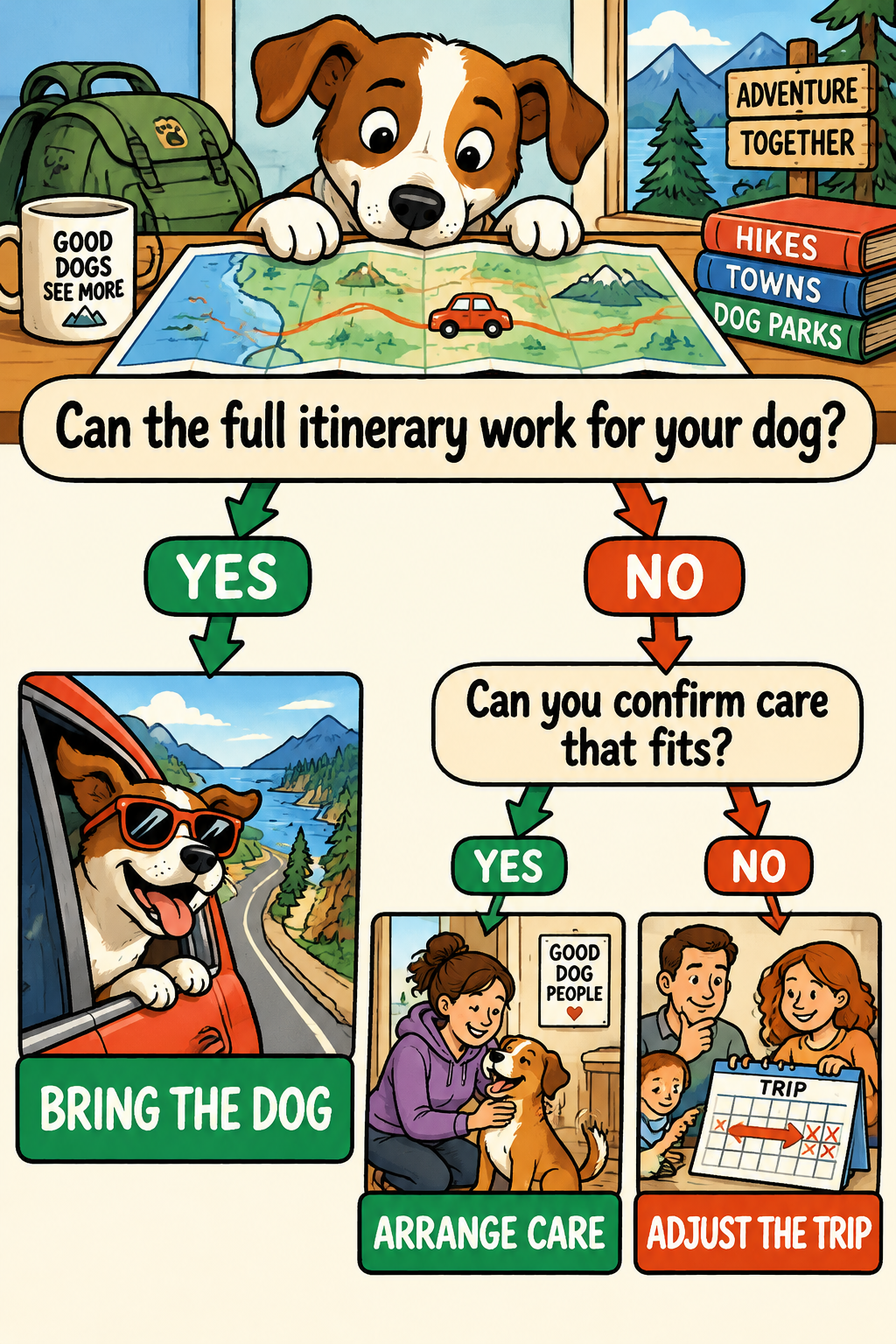
- Can the full itinerary accommodate your dog? Check transport, each place you’ll stay, activities and time apart—not just the destination’s general dog-friendly label. If yes, consider bringing them.
- If not, can you confirm care that suits your dog and your plans? A trusted sitter, boarding arrangement or familiar helper may work. If the answer is yes, arrange care.
- If neither route is settled or workable, can the trip change? Consider a shorter visit, a split trip, a different destination or one person staying home. Changing the plan is a valid outcome, not a planning failure.
If you’re still stuck, name the unresolved question, identify who can answer it, and decide what you’ll do if the answer is no. “We’ll figure it out later” has a way of becoming the holiday plan—usually just after the cancellation window closes.
Route one: bring the dog 🐾
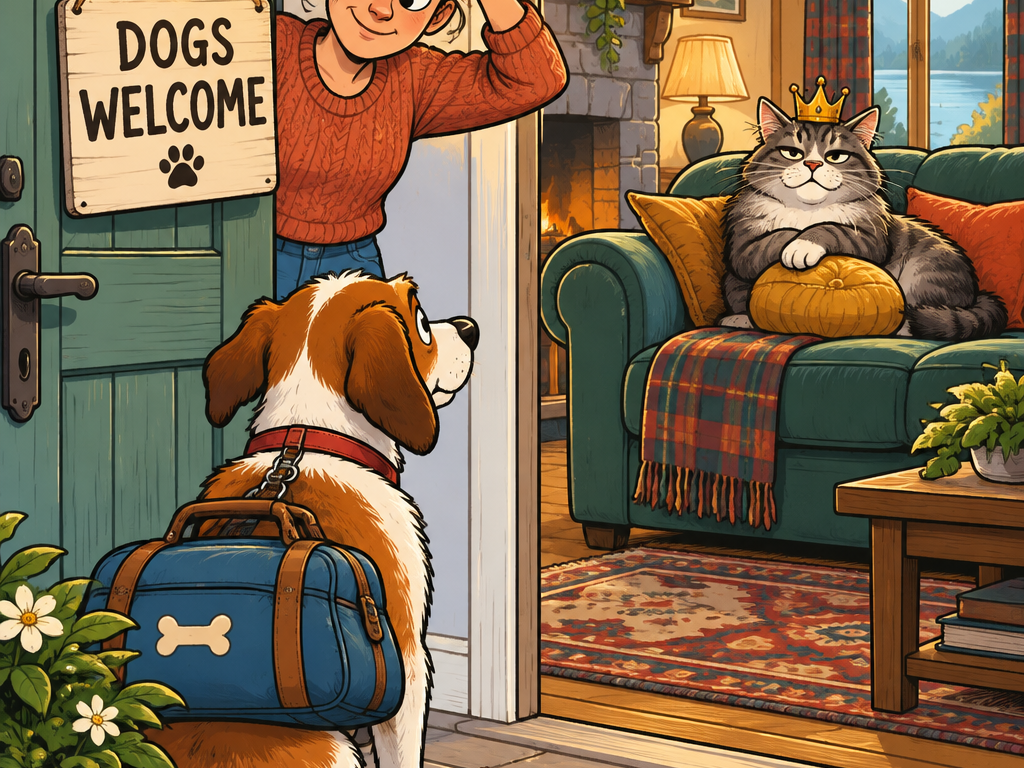
Bringing your dog can be a good fit when the places and people involved genuinely make room for them, and the travel itself is manageable for your household. Think through the ordinary day at the destination: where the dog will rest, how their usual care will happen, and what you’ll do when the humans have plans that don’t include a dog.
Ask each host or accommodation provider specific questions before you commit. “Dogs are fine” might mean a dog can stay in the room; it may not answer whether they can use the sofa, meet the resident cat, be left alone, or join the meal under the table. The host says yes, the cat says absolutely not, and the sofa has become a diplomatic issue. Better to clarify before arrival.
- Are dogs allowed in the exact room or property you’re booking? Are there limits, fees or other conditions?
- Where may the dog go, and are there restrictions on furniture, shared spaces or leaving them alone?
- Are there resident pets, children, visitors or household routines you should discuss in advance?
- Which activities will your dog join, and what is the plan when they cannot?
- How will travel days, breaks, meals and rest fit around the dog’s usual needs?
Check the rules directly with the relevant transport provider and every place you plan to stay. Requirements and policies vary by carrier, route, location and property, and they can change. If the trip crosses borders or involves special documentation, confirm the current requirements with the appropriate official sources and providers before booking. Don’t rely on an old social post that begins, “We did this last summer.”
Plan how your dog will travel safely, using an appropriate restraint or carrier and following the rules and guidance that apply to your vehicle and route. A packed car is not automatically a dog-friendly car. And if an activity doesn’t allow dogs, don’t assume a parked vehicle is a suitable place for them to wait; make a different plan for that time.
Also consider what you need to make the route manageable: familiar supplies, enough space for everyone, and a clear plan for who handles the dog at each stop. If the dog will be apart from you during activities, be honest about how often and for how long, and whether that arrangement is permitted and practical.
Route two: arrange care 🏡
Leaving your dog at home, with a sitter or in boarding can be the more comfortable option for a trip that is busy, restrictive or difficult to manage with a dog. It can also be the route that takes the most advance arranging. Availability and fit matter more than a generic “best” choice.
Compare realistic options by asking: Does my dog know this person or setting? Can the carer meet the dog’s established routine and needs? Am I comfortable with the handover and communication? Are the dates actually available? A relative who knows your dog well may be a lovely fit—or may be unavailable when the whole family is travelling. A professional provider may have a clear process, but you still need to check whether it suits your dog.
For boarding or a sitter, confirm dates, drop-off and pick-up arrangements, what the service includes, how updates work, and what happens if your travel plans shift. Ask directly about any requirements the provider sets and whether they can manage the dog’s usual care. If you’re considering someone new, don’t let a cheerful website substitute for a real conversation about the arrangement.
A puppy can make the calendar feel especially crowded: the people who would usually help may be away, and care arrangements need to account for the puppy’s actual routine. That doesn’t dictate the answer. It does mean sorting out availability and expectations early, rather than hoping a relative will materialise between the main course and dessert.
Whichever option you choose, decide who has responsibility for the dog and who can be contacted if something changes. Clear instructions and contact details help a carer; the aim here is to settle whether care is a viable route before you lock in the trip.
Route three: adjust the trip ✨
Sometimes the honest answer is that bringing the dog doesn’t fit, and the care you can arrange doesn’t feel workable. That is useful information, not evidence that you have failed at holidays.
Could you shorten the visit, travel for fewer days, choose a place that works better for the dog, or split the trip so the dog isn’t included in every leg? Perhaps one person travels while another stays home. Or perhaps this is the year for a different destination, a quieter gathering or a visit on another weekend.
The family group chat may briefly become a logistics committee. One person suggests the dog “just come along”; another asks where the dog will sleep; someone else has already sent a link to a cottage that turns out not to allow pets. Bring the conversation back to practical questions: what is confirmed, what is still uncertain, and what change would make the plan manageable?
Not settled yet? Write down the one detail that could change your decision, who can confirm it, and the date by which you need an answer. If the answer is no—or there’s no answer—choose your fallback before booking deadlines make the choice for you.
The dog-specific reality check 🐶
Try to picture your own dog in the actual setting, not an imaginary holiday version of them who loves car journeys, strange beds and a schedule dictated by brunch. What are they used to? How do they tend to handle changes in routine or unfamiliar places? Do they settle around new people and household activity, or need more space and predictable downtime?
Think about what support you would need, too. Would you spend the whole visit monitoring the door, negotiating with a host about the sofa and calculating whether the dog has had enough of a break? That may be perfectly manageable—or it may turn a visit into a job with festive napkins.
A lovingly prepared plan can meet the dog’s actual opinion of the unfamiliar place. If the dog seems uncomfortable with the arrangement, be willing to reassess rather than insisting the itinerary must be fulfilled because it is already in the group chat. Build in a fallback where you can. If you have specific concerns about your dog’s ability to travel or cope with a proposed arrangement, ask a qualified professional familiar with your dog for guidance.
Settle the awkward details before money is committed ✅
Before confirming bookings, make sure somebody can answer these questions:
- Who is responsible? Name the person handling the dog during travel, stays, activities and any time apart.
- What is allowed? Confirm rules with the host, accommodation and transport provider directly. Ask about the details that affect your plan.
- Is care available? If the dog isn’t travelling, confirm the actual dates and arrangement with the sitter, boarding provider or helper.
- What if plans change? Check cancellation, amendment and care-change terms. Find out who needs to know if timings shift.
- Who is the backup contact? Choose someone reachable who understands the plan, rather than assuming the first contact will always be available.
- What remains uncertain? Give every open question an owner and a deadline. If it cannot be resolved, switch to the fallback.
These aren’t glamorous questions, but they are often what separates a settled plan from a holiday-long game of “Wait, did anyone ask?”
Your one-page holiday dog planner 📝
Copy, print or paste this into the family chat. The checkboxes are optional; the answers are not.
- Our route: Bring the dog / Arrange care / Adjust the trip
- Travel dates and main stops: __________________________________
- Who is responsible for the dog? __________________________________
- Transport rules checked directly: Yes / Not yet / Not applicable
- Safe travel setup planned: Yes / Not yet / Not applicable
- Every accommodation or host rule confirmed: Yes / Not yet / Not applicable
- Activities that do not include the dog—and the plan for those times: __________________________________
- Care option and dates confirmed, if needed: __________________________________
- Provider or host questions still open: __________________________________
- Who will confirm them, and by when? __________________________________
- Cancellation or change details checked: Yes / Not yet
- Backup contact: __________________________________
- If our first choice stops being workable, we will: __________________________________
Then read the plan once as if you were the dog’s assigned human, not the person who made the spreadsheet. If you can tell where the dog will be, who is in charge and what happens when plans change, you’re well ahead of “we’ll figure it out later.”
Maybe your dog will ride along and inspect every rest stop like a regional snack auditor. Maybe they’ll stay with someone familiar and spend the holiday wondering why the routine includes so many excellent naps. Maybe the trip will get shorter, simpler or entirely rearranged. A good holiday plan doesn’t have to include the dog in every photograph. It has to make sense for the dog, the people, and the journey you’re actually taking.


Leave a Reply
You must be logged in to post a comment.