


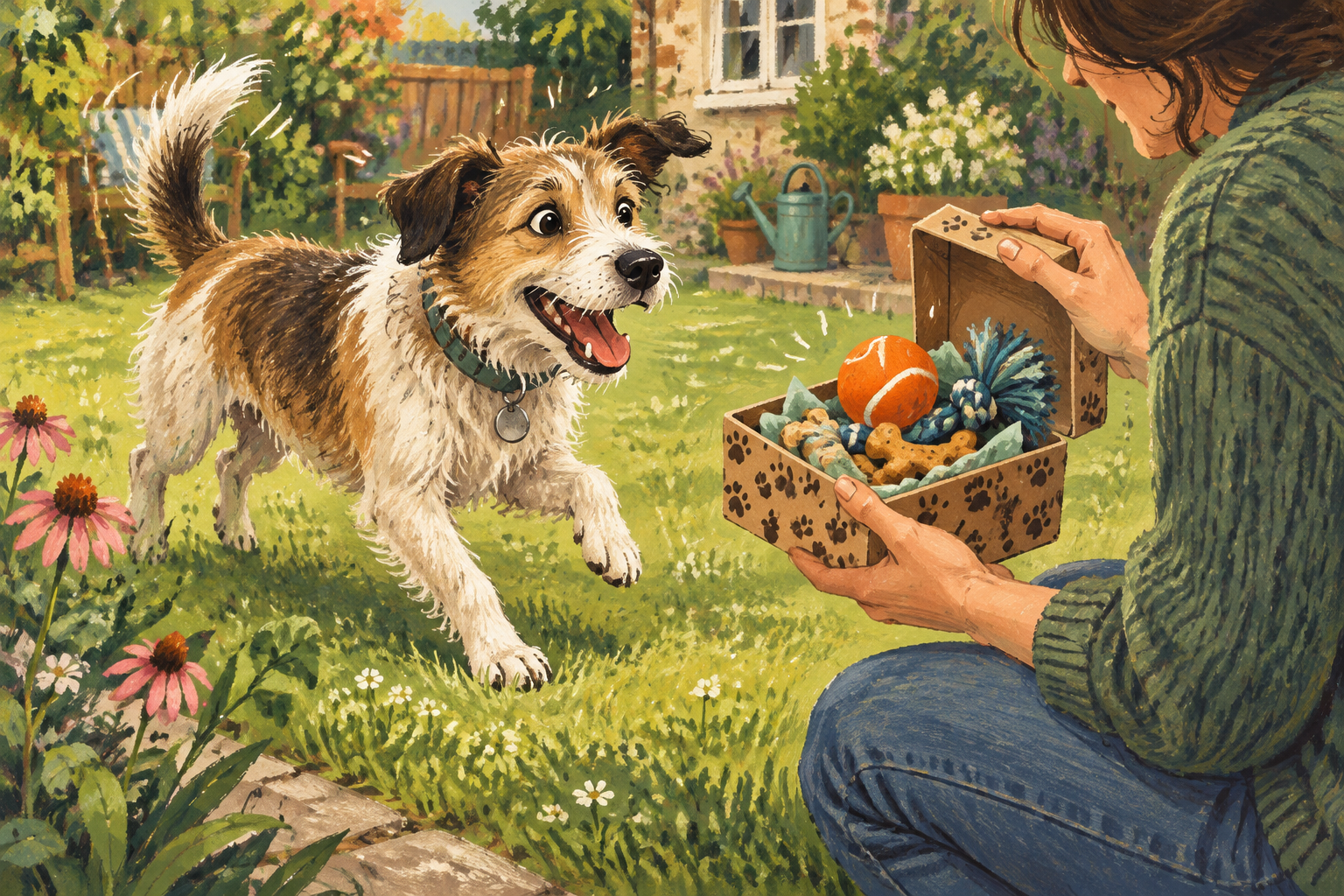
Your dog is happily sniffing the garden, and you call “Come!” They look up, consider the offer, then return to the fascinating patch of grass. A good recall cue needs practice—and a reason for your dog to choose you.
These five little games make coming back rewarding without turning every practice into a serious training session. Start somewhere quiet and easy. When your dog comes to you, celebrate and reward them with something they enjoy: a treat, a toy, a quick game or a chance to go back to sniffing. 🐕
1. The “come, then go play again” game
In a secure garden or quiet room, let your dog wander a little. Say their recall cue once in a cheerful voice. When they reach you, give them a treat or a moment of play—then invite them back to what they were doing.
This teaches a useful lesson: coming to you doesn’t always mean the fun is over. If your dog comes readily in this easy setting, try it another day with a mildly more interesting sniff nearby. If they don’t turn toward you, move closer or make the setting easier rather than calling again and again.
2. Two-person recall ping-pong
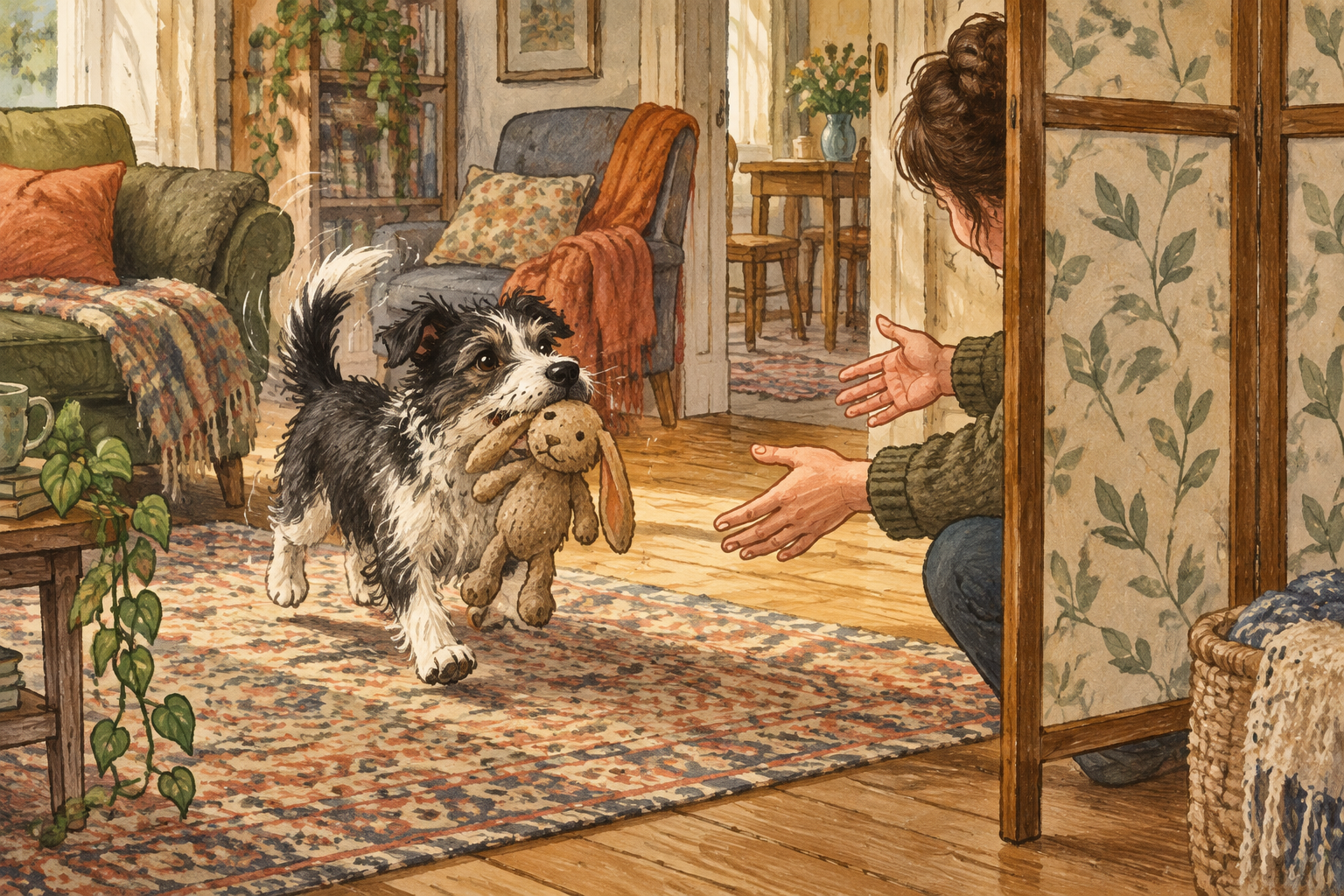
Ask a second person to stand a short distance away in a safe, familiar space. Take turns calling your dog by name and giving the recall cue. When your dog reaches the person who called, that person rewards them; then the other person takes a turn.
Keep the distance short enough that your dog is happy to trot between you. If they hesitate, one person can make themselves more inviting—crouch, open their arms or take a step backward. 🏓 The aim is a fun back-and-forth, not a contest to see who can call loudest.
3. The little “find me” recall
When your dog is nearby and looking elsewhere, say their name, give your recall cue and take a few quick steps away. Most dogs find a person moving away more interesting than a person standing still. When your dog catches up, reward them warmly.
Try this in a hallway or fenced yard, with no stairs or obstacles in the way. If your dog seems unsure or doesn’t follow, don’t chase them or keep repeating the cue. Make it easier: shorten the distance, use a happier voice and reward any movement toward you.
4. Call away from an easy distraction
Put a low-key distraction—such as a toy on the floor—several steps away from your dog. Let them notice it, then call them from a distance where they can still respond. When they come, reward them well. Sometimes, after the reward, let them return to sniff or investigate the toy.
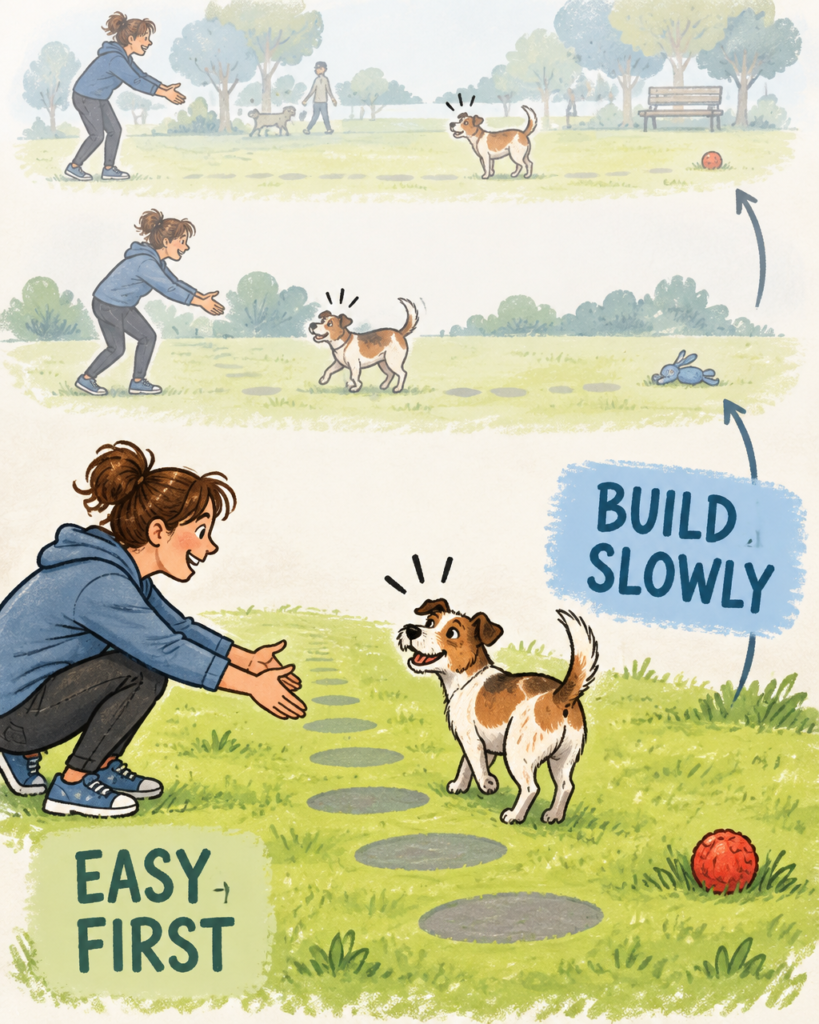
Think “easy first,” not “call them away from the best thing in the universe.” If your dog is glued to the toy, increase the distance between them and it, or practise without the toy for now. 🧸 A recall that works in the living room doesn’t automatically work in the middle of an exciting park; add challenges gradually.
5. The surprise-reward recall
Call your dog from just a few steps away. When they arrive, offer a small handful of their usual treats one at a time, a favourite toy for a brief tug or another reward they genuinely enjoy. Keep the surprise for after they reach you, so the cue—not a treat waved under their nose—does the inviting.
Use dog-safe treats that suit your dog, and keep portions sensible. If food isn’t what gets your dog excited, make the reward a quick game or enthusiastic attention instead. The best prize is the one your dog is happy to work for.
Keep the game easy enough to win
Practise for a minute or two, then stop while your dog is still enjoying it. Use one cue, give your dog a moment to respond and reward every successful return. If they aren’t responding, take it as useful information: the distance, distraction or excitement may be too much for this round. Go back to an easier setup rather than turning the cue into background noise.
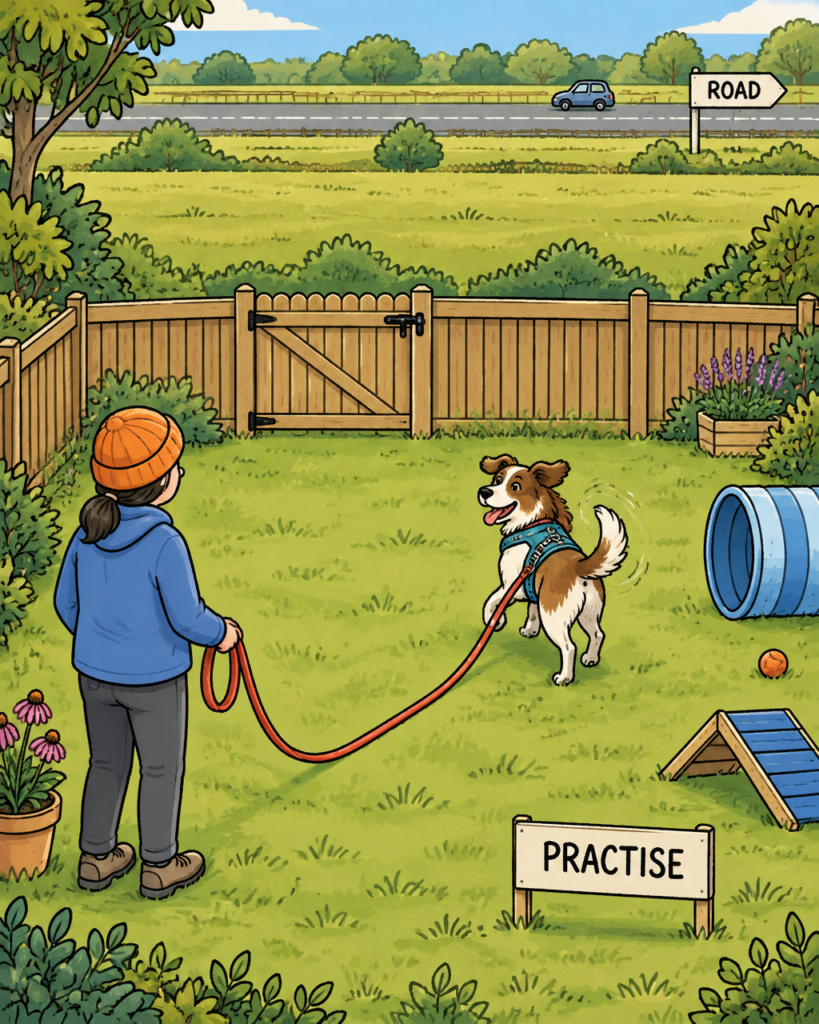
These games build a foundation, not a guarantee that your dog will return from every distraction. Until you’re confident in a particular setting, use a secure fenced area or a long line attached to a harness, and stay well away from roads. Coming when called is worth practising—but the safest plan doesn’t depend on a dog-in-training being perfect.
Make the easy returns feel like good news, and your dog gets plenty of reasons to keep checking back in. ✨
Leave a Reply
You must be logged in to post a comment.