


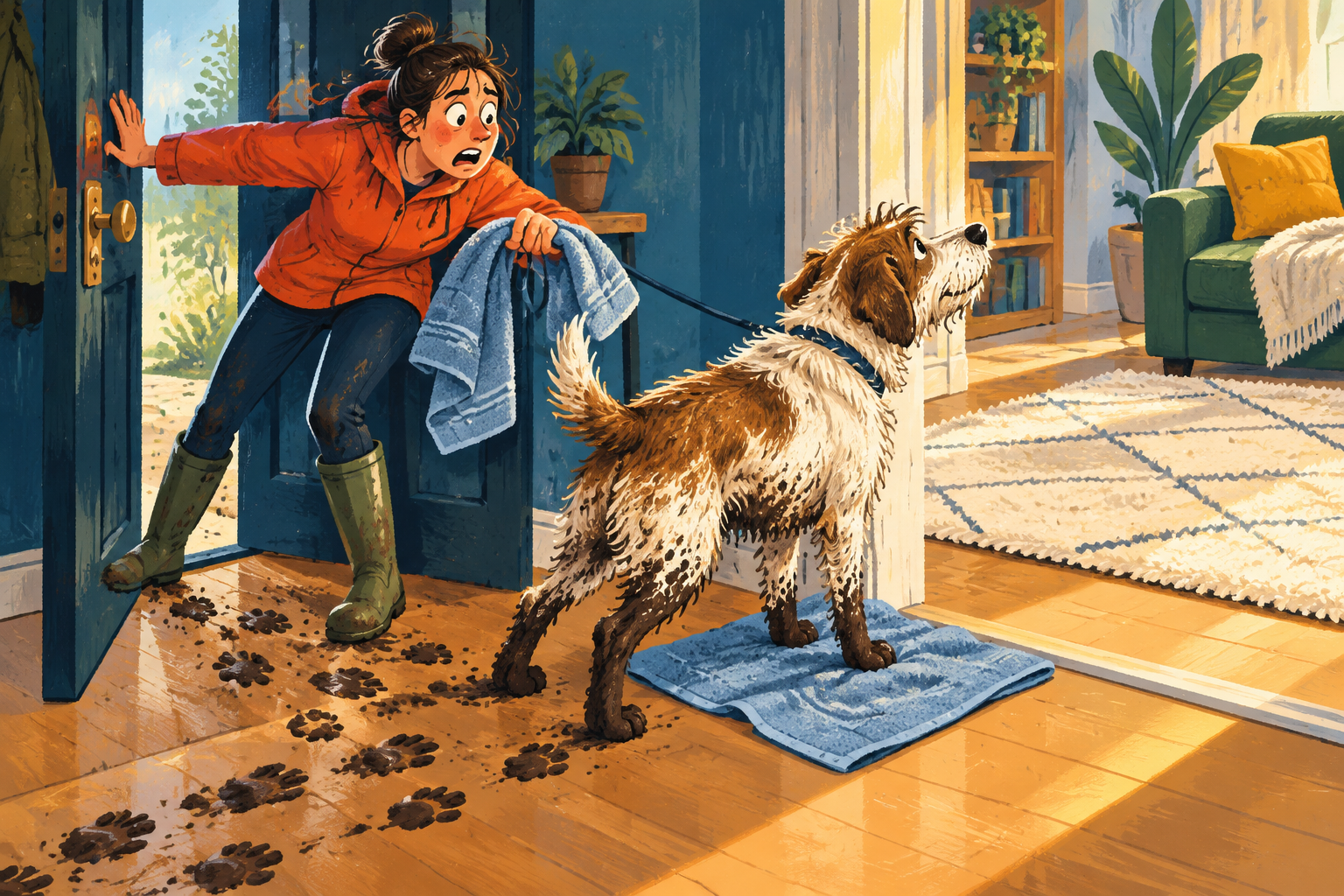
The dog is barely over the threshold. You have the door, the lead and a towel under control—or at least you did until one paw landed on the mat and the other three set off to explore. By the time you have negotiated the coat, the leash and a cheerful tail, the mud has reached the hallway. Possibly the cleanest part.
The answer doesn’t have to be a paw-washing station worthy of a dog spa. It helps simply to plan a short, repeatable landing route: where your dog comes in, where they can pause, where the towel lives and where wet gear goes. Think of it as staging the first few feet indoors so the cleanup doesn’t become a house tour. 🐾
First, follow the mud 🕵️
Before moving furniture or ordering a special mat, watch one ordinary wet-weather return. Where does your dog naturally stop? Which way do they turn? Does the entrance open directly into the living room, or is there a hallway between the door and the sofa? And where can you reach without letting go of the lead, the dog or your last shred of optimism?
The route matters as much as the doormat. A towel beside the door is less useful if the dog walks past it to greet the family. A washable runner may help catch dirt, but it won’t help much if the next stretch is pale carpet. Choose a pause point that your dog can comfortably reach and that you can manage without blocking the door.
A simple route to picture:
OUTSIDE → DOOR → PAUSE ON A WASHABLE SURFACE → TOWEL WITHIN REACH → WET GEAR PARKING SPOT → REST OF HOME
Now mark the usual escape points: the corner where your dog shakes, the spot where you detach the lead, or the turn toward the room with the light-coloured rug. Your route doesn’t need to stop every muddy paw. It just needs to make the most convenient path the least messy one.
Three landing zones, matched to real homes 🏠
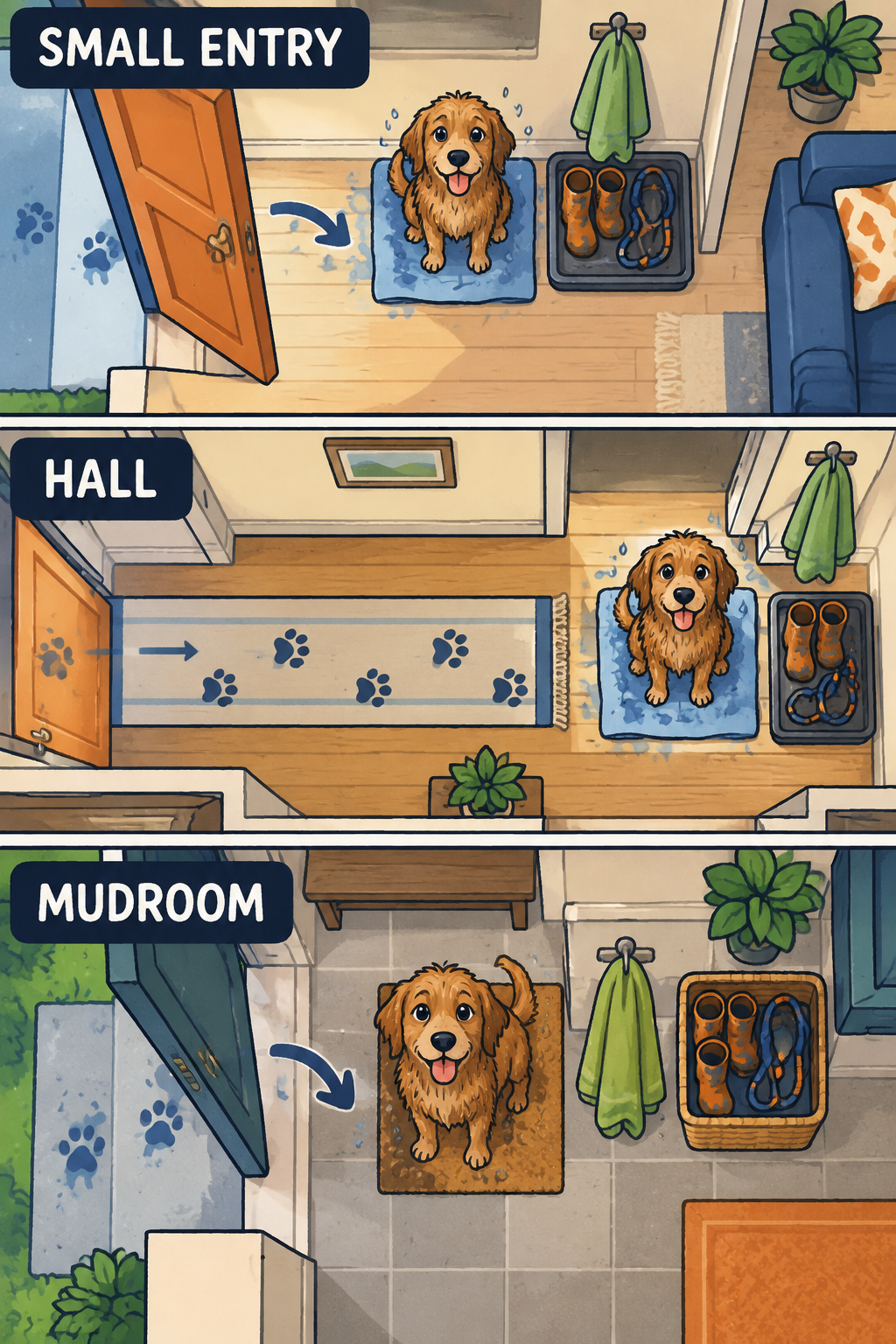
1. The small apartment entry: towel first, ambitions second
If your front door opens straight into the living area, there may be no spare hallway to turn into a canine airlock. That’s fine. Put a washable towel or mat just inside the door, positioned so your dog can step onto it while still on lead. Keep a second, dry towel close enough to grab without crossing the room.
Use what you already own first: an old bath towel, a washable mat or a folded blanket you don’t mind laundering. If the floor is slippery, choose something that stays put or secure it safely; a mat that skates away when stepped on is a new problem wearing a practical disguise. A nearby hook can take a wet coat, while a basket or washable tray can corral the lead without blocking the exit or creating a trip hazard.
If the nearest sink is across the apartment, don’t make “wash every paw immediately” the only plan. Blot off loose moisture and visible dirt at the door, then decide whether anything needs a more thorough rinse later. For a quick return on a merely wet day, the towel may be the whole routine.
2. The hallway or shared entrance: make a neat little checkpoint
A hallway gives you a few more steps to work with, but it may also be shared space. Keep the landing zone inside your own doorway wherever possible: a washable mat just in, towel on a hook or shelf nearby, and a contained place for wet leads or outer layers. Don’t leave gear in a shared corridor or where someone could trip over it.
For a longer hall, set the washable surface at the first natural pause rather than at the far end. If your dog tends to march straight through, guide them toward the towel with your position and a calm, familiar cue—without yanking them into place. You can also close an interior door or use a suitable barrier to keep the muddy route from reaching the soft furnishings while you finish.
A narrow washable runner can help with the path from the door to the pause point, but it’s optional. If you add one, check that it lies flat and doesn’t bunch under paws. The best mat is the one your dog can walk over safely and you can clean without turning laundry day into a second career.
3. The mudroom or back door: useful space, not a dog spa requirement
If you have a utility room, porch or mudroom, congratulations: you have a naturally convenient place to park the muddy expedition. Put a washable mat where the dog enters, a towel where you can reach it, and a basket, hook or tray for wet gear. If there’s a sink or outdoor tap nearby, you can use it when a rinse is genuinely needed; you don’t need to wash every paw on every return.
Keep a clear, comfortable standing area for your dog. If you’re handling paws, work at a pace they can manage and avoid balancing them on a slick floor. A towel secured on a nonslip surface can provide a familiar place to stand while you dry feet one at a time. If your dog is large, stiff, elderly or simply not keen on close handling, adapt the arrangement so they can stand naturally and you can reach without wrestling.
Even a spacious room can have a muddy escape route. Look for the uncovered strip between the door and the towel, or the spot where wet gear gets dropped on a chair. Give each item a home and keep the walking path clear.
Make the arrival calm—and brief 🐶
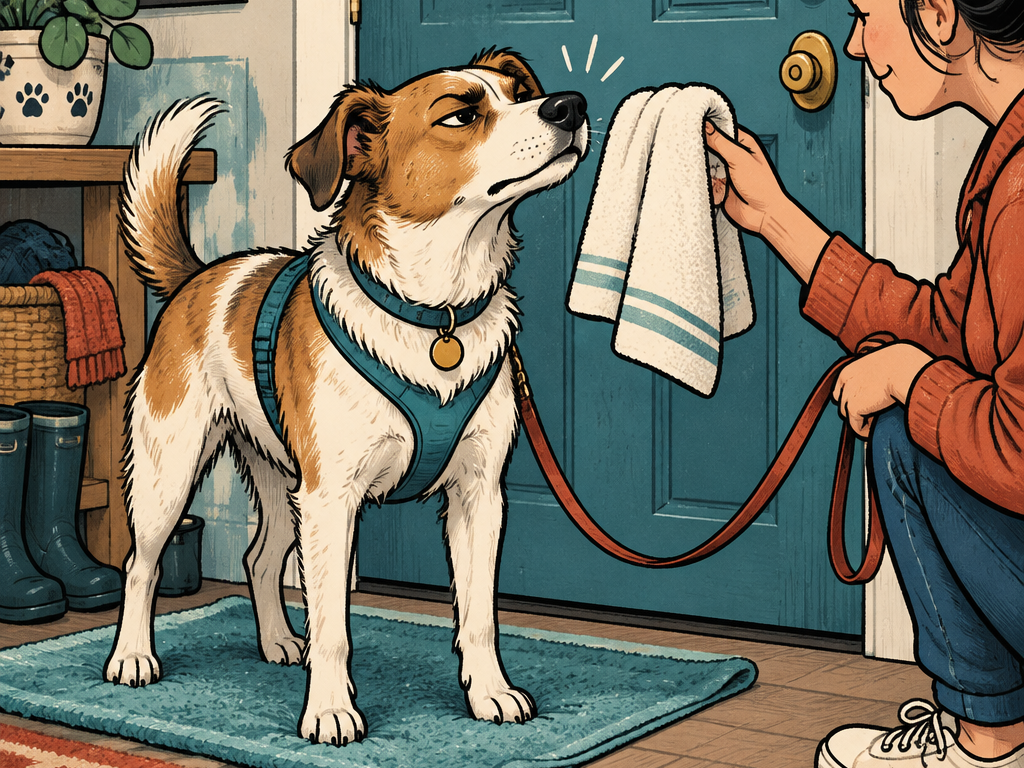
Before the next walk, put the towel where your hand can find it. When you come in, keep hold of the lead until the door is secure, invite your dog onto the washable surface and do the simplest cleanup that fits the conditions. Blot rather than scrub if that’s more comfortable for your dog. If mud is caked between the toes or a rinse is needed, use water that’s comfortable and dry the area afterward. Don’t use household cleaners on your dog’s paws.
Some dogs happily present a paw; others regard foot handling as a highly suspicious new policy. If yours pulls away, stiffens, tries to leave or otherwise seems uncomfortable, don’t turn the entrance into a tug-of-war. You can wipe only the areas they comfortably allow, let them settle, or use a different approach later. For example, a secured towel or nonslip surface and a few gentle passes over the paws while the dog stands may suit better than lifting a foot. If paw handling is an ongoing challenge, build comfort gradually away from the muddy doorway or ask a qualified professional for help.
And yes, the dog may step onto the towel with exactly two paws, leaving the others to produce a tiny abstract painting on the floor. That is not a sign that you need a more expensive towel. It may mean the towel needs to move, the route needs simplifying, or your dog needs a little practice getting comfortable with the routine.
Where the wet stuff goes: the second half of the plan 🧺
Wet paws are only part of the arrival. A dripping lead on a chair, a muddy coat on the clean laundry and a towel abandoned in a heap can make the landing zone feel like a small, damp festival. Pick a temporary parking spot for each item:
- Leads and harnesses: Hang them on a hook or place them in a washable tray. Let wet gear dry somewhere it won’t drip onto a walkway.
- Coats: Hang them where air can reach them, rather than folding them wet into a basket. Check the care instructions before washing.
- Used towels: Keep a laundry basket or washable bag nearby, and let damp towels dry or go into the wash rather than leaving them in a pile.
- Muddy debris: Shake or brush it off outside when practical, or contain it near the entrance so it doesn’t travel on shoes and paws.
No nearby tap? No problem. A towel-first routine is often the most realistic option. If you later find that a specific problem keeps recurring—say, one paw is consistently thick with mud—you can add a small basin or another rinse option that works for your space. Special paw-cleaning gadgets are choices, not entrance fees.
If your dog comes home muddy from time to time, that doesn’t automatically mean bath time. A targeted wipe-down may be enough; coat, lifestyle and individual needs all affect bathing routines. For a broader guide, see how often you should bathe your dog.
The five-minute landing-zone check ✅
Before the next wet walk, try this quick setup with items you already have:
- Stand at the door. Notice where your dog naturally pauses and which way they head next.
- Lay down a washable surface. Use an existing towel or mat, and make sure it won’t slide or create a trip hazard.
- Put a dry towel within reach. Don’t make yourself cross the room while holding the door and lead.
- Choose a wet-gear spot. A hook, tray or basket can work, provided it keeps the walkway clear.
- Test the route on the next rainy return. Notice the one place the mud still escapes, then adjust that spot—not the entire house.
Saveable landing-zone checklist: washable pause spot • towel within reach • clear path • wet-lead and coat parking • laundry spot for used towels • cleanup your dog can comfortably tolerate
The perfect setup isn’t the one with the most equipment. It’s the one you can reach with one hand, your dog can use without a negotiation summit, and the mud is slightly less likely to follow you into the cleanest room in the house. Start with a towel. Let the next rainy walk tell you what, if anything, the landing zone still needs. 🐾
Leave a Reply
You must be logged in to post a comment.