


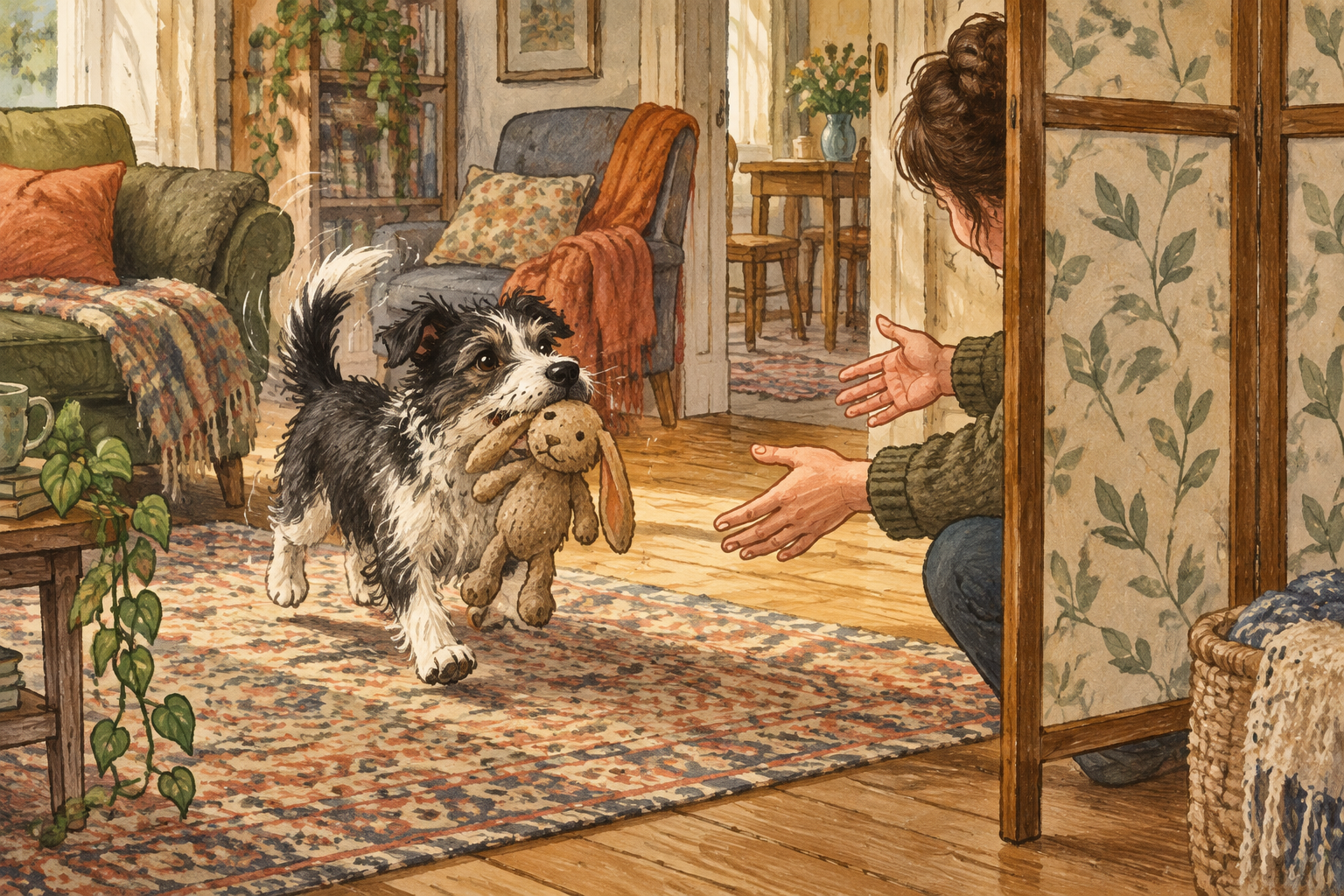
Your dog hears their name from the next room, pauses, and suddenly becomes very interested in something else. But let them discover you’ve vanished behind a doorway and—look at that—here they come. 😄
That’s the charm of hide-and-seek: it turns finding you into the fun part. You don’t need a perfect “stay” or a house full of hiding places. Start so easy your dog can win, then make the search a little more interesting if they’re enjoying it.
Start with a hide that barely counts
Choose a quiet room and have your dog nearby with another person, or let them watch you step behind a doorway. Call your dog once in a cheerful voice. When they find you, greet them warmly or offer a small treat or favorite toy. 🎉
No helper? Begin while your dog is calmly occupied in a dog-safe room, then step just out of sight and call. Don’t shut them somewhere that makes them uncomfortable, and don’t ask for a long wait. The first round is about making the game clear: Find me, and good things happen.
Make the next round a little harder
Once your dog is happily following the game, try a nearby hiding place with part of you still visible—behind a chair, for example, or just around a corner. Call once, then give them a moment to search. If they get stuck, make it easier: lean out, say their name again, or let them see where you are. A dog who needs a clue isn’t doing it wrong; they’re learning the game.
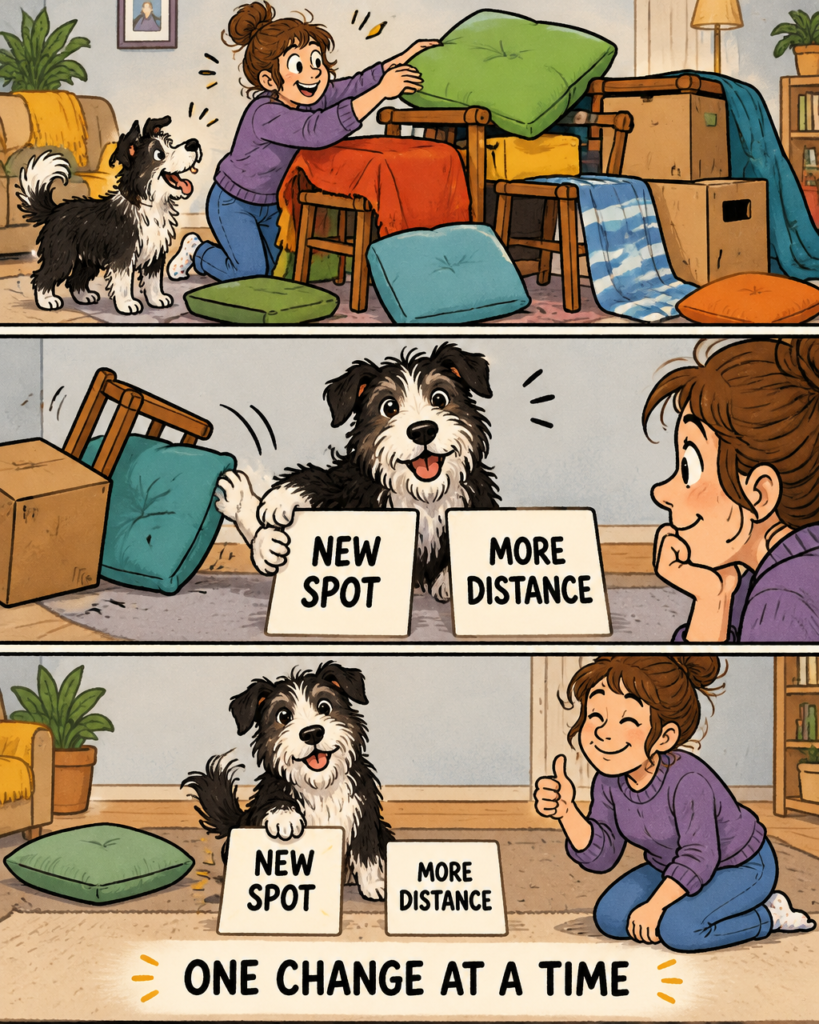
When your dog is finding you easily, move to another room or stand behind a partly open door. Change one thing at a time: a new hiding spot or a little more distance, not a grand household disappearing act. 🕵️
Keep it playful, not a recall exam
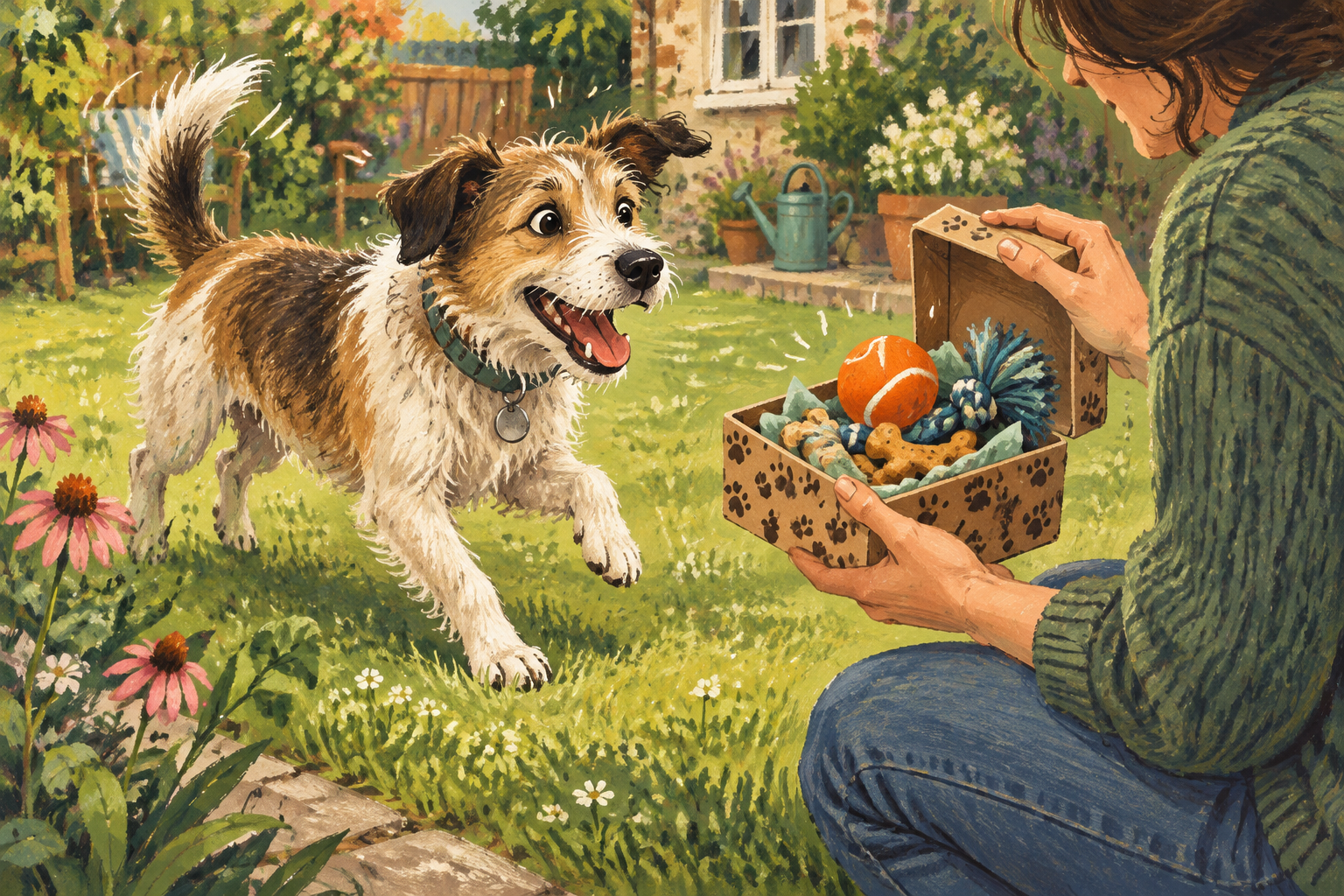
Use a familiar, happy call, and make sure finding you pays off with something your dog actually likes—praise, a little play, a treat, or a favorite toy. If they wander off, don’t keep repeating the cue in an increasingly urgent voice. Show yourself, reset with an easier hide, and let them win the next round.
Keep the search to a safe, familiar space. This is a game to play indoors or in another enclosed area—not a reason to test whether your dog will come when called in an open or unfamiliar place.
Quit while your dog still wants another turn
A few successful searches can be plenty. If your dog seems unsure, stops engaging, or would rather go do something else, make the next hide easier or call it a day. The best hiding spot is the one that gets your dog searching with a wag—not the one that makes you impossible to find.
Start behind the nearest doorway. Your dog may be better at finding you than you are at keeping a straight face. 😅
Leave a Reply
You must be logged in to post a comment.