
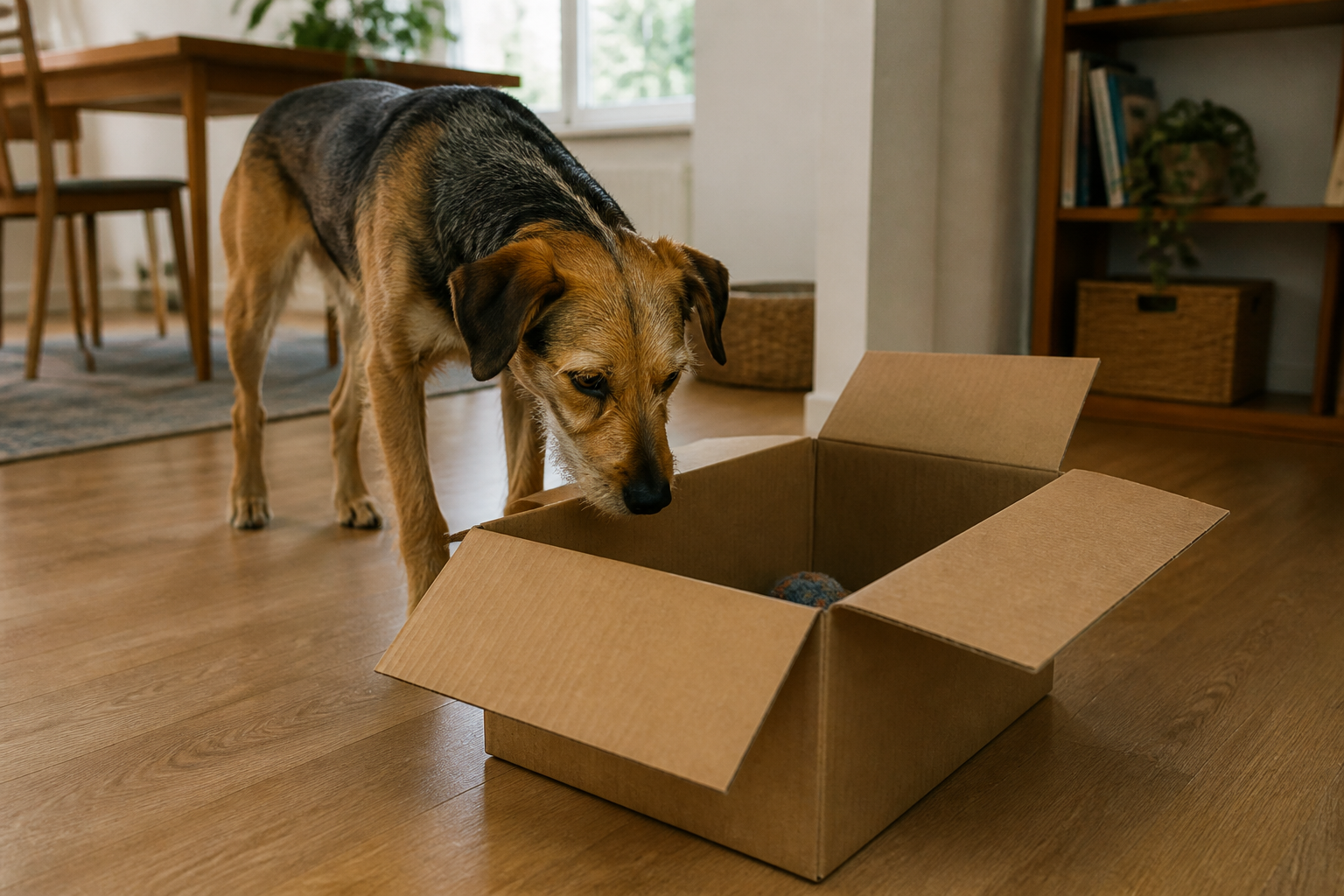
There is a particular look a dog gives a cardboard box: not the look it gets from you, who sees a box that needs breaking down, but the look of someone who has just discovered a new room.
That difference is the useful part. An interesting day for a dog doesn’t have to arrive in a parcel, require a special mat, or come with instructions involving three ingredients and a freezer. Sometimes it’s dinner scattered across a clean patch of floor. Sometimes it’s a familiar toy hidden under a chair. Sometimes it’s a game of tug that lasts exactly as long as both players enjoy it.
“Enrichment” can sound like one more thing a good dog owner is supposed to arrange. It doesn’t need to be. Think of it less as a programme and more as a small change to something you already do.
Start with the thing your dog already likes
If your dog is interested in food, a meal can become a little search rather than a bowl placed down in the usual spot. Scatter some of their usual kibble over a safe, easy-to-clean area, or hide a few pieces in places they can reach without climbing or pulling anything down. Keep the first round obvious. The aim is a pleasant hunt, not a puzzle designed by an escape-room enthusiast.
Some dogs get the idea at once and begin canvassing the room with great purpose. Others look at you as if you have misplaced their dinner. Make it easier: let them see where a piece lands, or start with only a few scattered bits. If searching isn’t their idea of a good time, no need to persuade them. The point is to offer an inviting option, not to win a contest against the food bowl.
And food doesn’t have to be the whole story. A dog who would rather chase a toy, play tug, investigate a sound, or stay close while you do something may find more in that than in a complicated feeder. Enrichment isn’t a test of how cleverly your dog can solve a problem. It’s a chance to notice what they choose to do.
Let an ordinary object have a brief second career
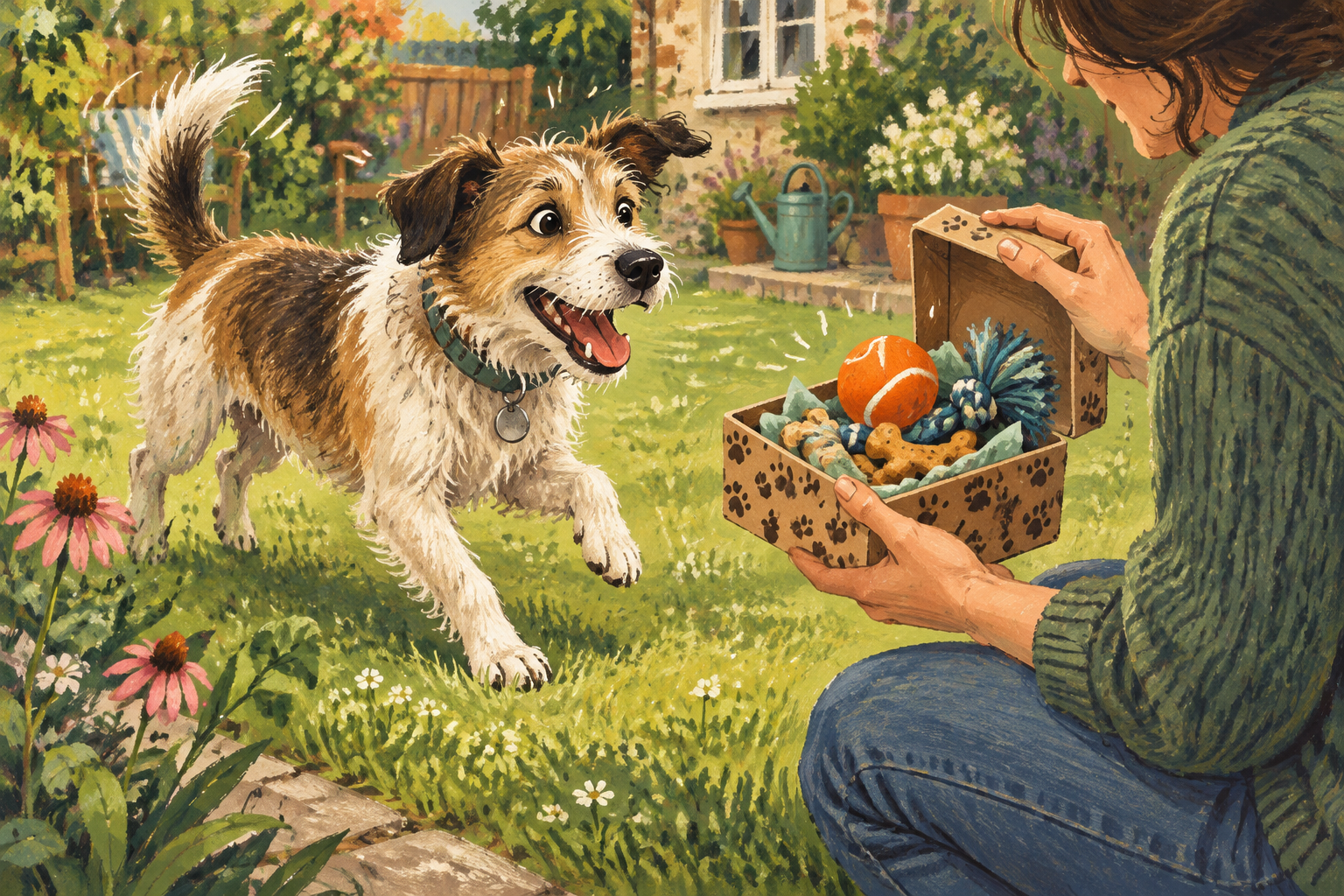
A sturdy cardboard box can be interesting to sniff or investigate, especially if there’s a toy or a few pieces of kibble inside. You can leave the flaps open and make the discovery easy. You can also fold a clean towel loosely over a toy on the floor and let your dog nose it aside, if your dog is comfortable around fabric and doesn’t tend to eat it.
These are not universal dog activities. One dog may inspect the box, find the treat, and leave as if completing an appointment. Another may decide the box itself is the main event. A third may prefer that you roll a ball down the hallway while they watch with deep professional interest.
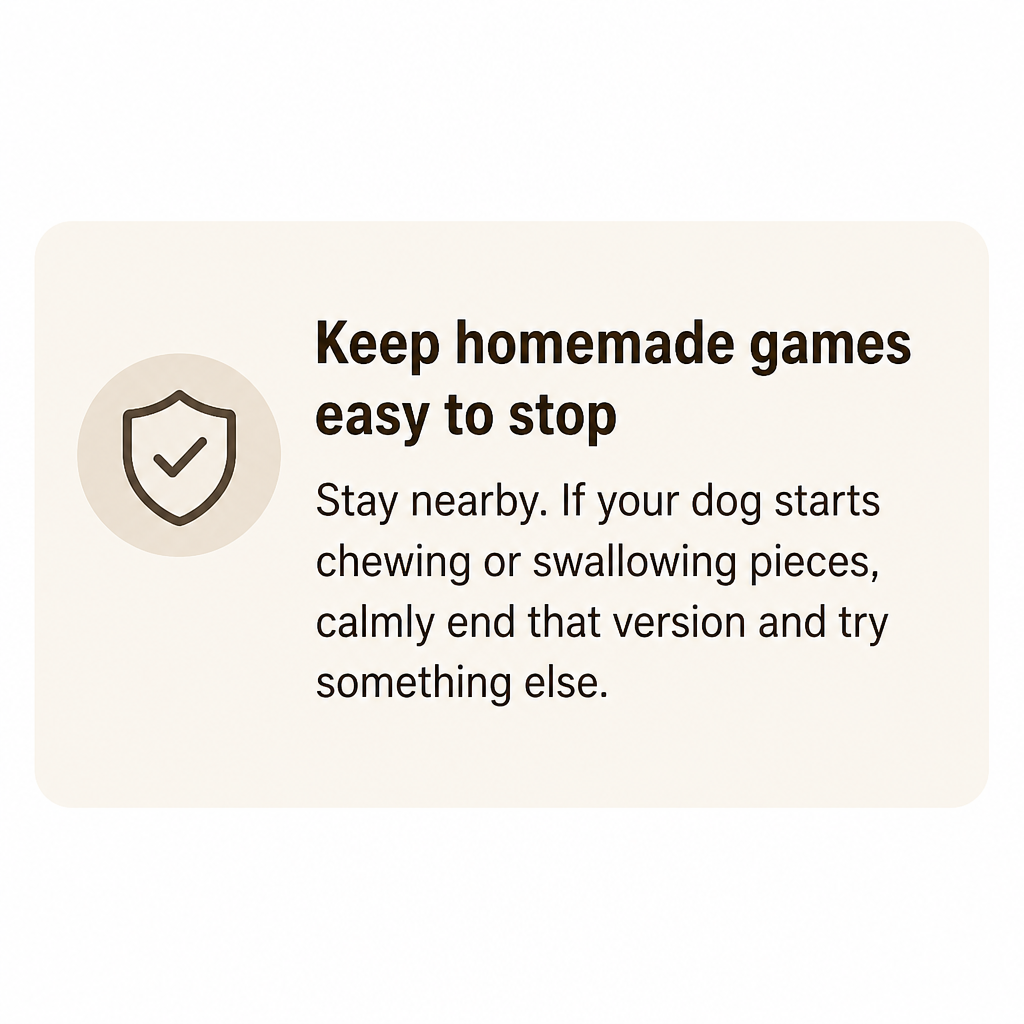
Use objects that are safe for your particular dog, and stay nearby when offering homemade games. If your dog starts chewing off or swallowing bits, calmly end that version and choose another. A household activity should be easy to stop; it should not turn into a negotiation over who gets the cardboard.
Make the familiar slightly different
Variety doesn’t require a brand-new activity every day. If your dog likes looking for a toy, hide it in a different easy spot. If they enjoy sniffing for kibble, use a different room or scatter a smaller amount. If the usual playtime is fetch, try pausing after a throw and letting your dog decide whether to bring the toy back, keep it, or ask for another go.
Small changes are often enough to make a familiar routine feel newly interesting. They also make it easier to see what your dog actually enjoys. Does the search hold their attention, or do they give up when the first clue isn’t obvious? Do they bring the toy back for another round, or wander off once they’ve found it? Do they like playing with you, or would they rather investigate at their own pace?
There’s no need to take notes. You’re just getting to know the individual dog in your living room, rather than an imaginary dog who loves every game on the internet.
Keep the activity smaller than the day
Enrichment can be brief. A few minutes of sniffing while you make tea still counts as a change of scene for the nose. A short play break between meetings still offers a moment of interaction. You don’t have to build a daily schedule around elaborate games, or turn a quiet dog into a project.
That matters on the days when time is tight. Instead of inventing a whole new activity, use part of a normal meal in a different way, offer a favourite toy, or invite your dog to join a low-key game they already know. If today is a bowl-on-the-floor day, that is also fine. The bowl is not a moral failure.
It helps to pay attention to the mood of the game, too. If your dog seems unsure, make it simpler or stop. If they’re getting wound up in a way that isn’t enjoyable for either of you, switch to something calmer. If they wander off, let them. A good activity doesn’t have to hold every dog’s attention until the final crumb.
And some of the most satisfying moments won’t look like a game at all. Your dog might carry a toy to the rug and settle with it while you work. They might sniff around a box, decide it contains nothing of importance, and go back to sleep. That still tells you something: the invitation was there, and they were free to accept it—or not.
The best idea is the one your dog comes back to
There’s a quiet pleasure in discovering that your dog has a preference you hadn’t quite noticed. Perhaps the treat hunt is more appealing when you’re nearby. Perhaps the squeaky toy only becomes interesting when you roll it across the floor. Perhaps cardboard gets a thorough inspection, but a crumpled paper bag earns immediate respect.
You don’t have to keep raising the difficulty or keeping up with a stream of new ideas. Try something simple, watch what happens, and repeat the parts your dog seems to enjoy. Change one small detail when it feels stale. Leave room for the possibility that your dog’s favourite enrichment today is simply being close while you finish the ordinary business of Tuesday.
The goal isn’t to make every day impressive. It’s to give an ordinary day a few more chances to be interesting—to your dog, and sometimes to you.
Leave a Reply
You must be logged in to post a comment.