
The first morning that feels different, your dog notices before you do.
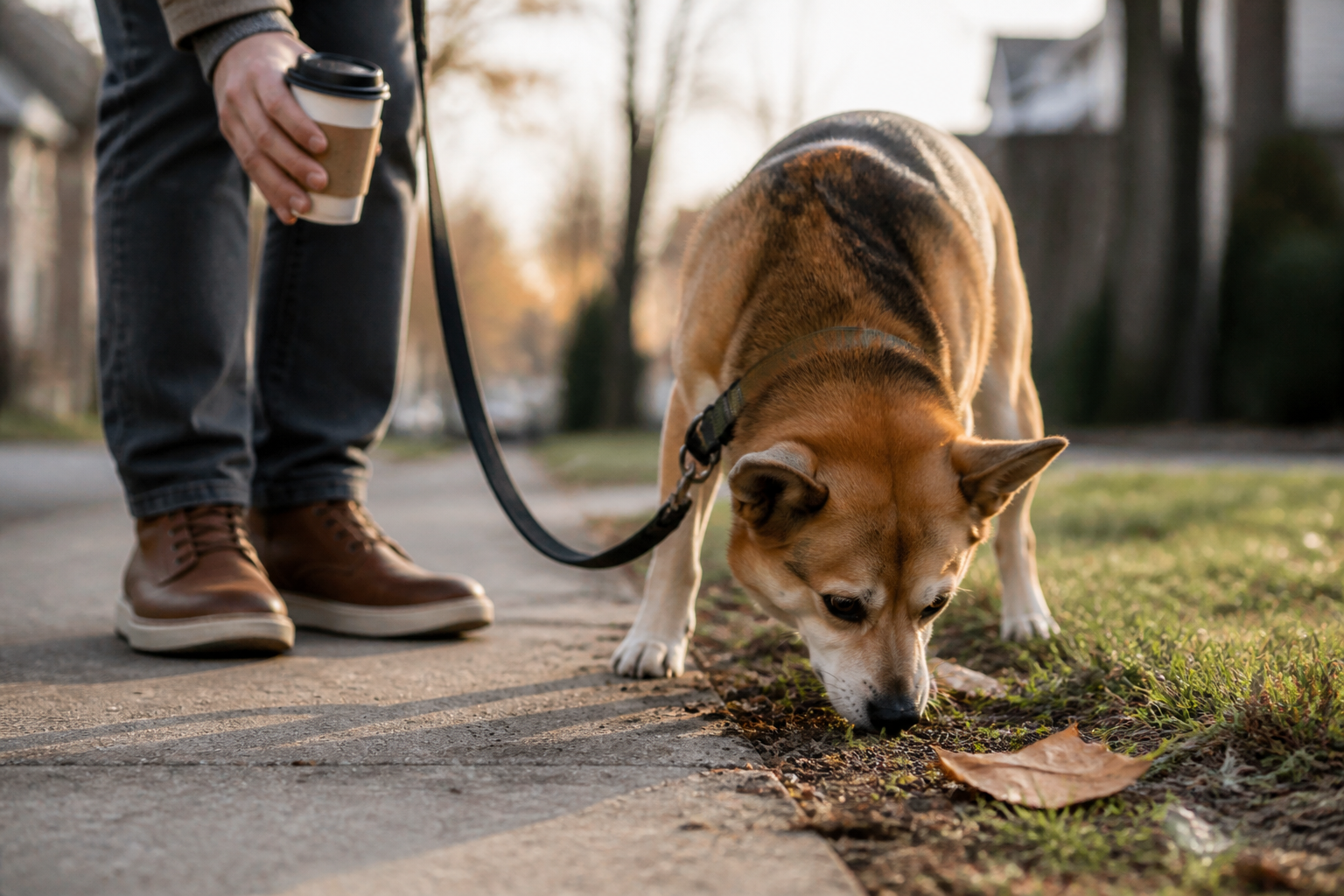
You step outside expecting the usual loop: the familiar corner, the usual patch of grass, home before the coffee gets cold. Your dog takes three steps, stops, and lifts their nose into the air as if the neighborhood has quietly changed its name overnight.
The route is the same. The air isn’t. Something rustles under a hedge. A leaf skitters across the pavement. The sun reaches the far side of the street at an angle you hadn’t noticed before. Your dog would like to investigate each development thoroughly.
And so the quick walk begins to loosen at the edges.
In places where the heat has eased, a walk can feel newly pleasant for both of you. Summer outings may have been planned around shade, cooler hours, or simply getting the necessary business done without lingering. Then one morning, the weather softens. You’re no longer counting the minutes. Your dog is no longer hurrying between interesting spots. The leash slackens. The day opens up.
That can happen at different times, or not at all, depending on where you live. For some people October means autumn. For others it brings spring, a wet season, or a day that still feels thoroughly summery. The calendar doesn’t decide whether your dog’s walk has changed. The morning outside does.
What changes first is often the pace. A dog who spent the hottest part of the year getting on with it may now have the energy—and the inclination—to take the scenic route. They pause at a fence they’ve passed a hundred times. They inspect a small patch of earth with the concentration of a detective who has been handed a very small, very important case.
You wait. At first, you may check the time. Then you notice the damp smell of soil, the crisp little scrape of leaves along the curb, the fact that the sky is doing something more interesting than being bright. The dog is not the only one who has started looking around.
There’s a particular pleasure in seeing a familiar route become slightly less familiar. A gate is open that’s usually shut. Someone has put out a new plant. The neighbor’s cat is sitting in its window with the stillness of a portrait. Your dog takes all of this in at walking speed, which is to say, not much faster than a thoughtful person can follow.
For a young dog, the world may be full of obvious discoveries: crunchy leaves, a new smell by the post, a twig that absolutely must come along for a few yards before being dropped. An older dog may have their own quieter version of the same expedition, with carefully chosen pauses and favorite places to linger. No two dogs need to explore in quite the same way for the walk to feel newly theirs.
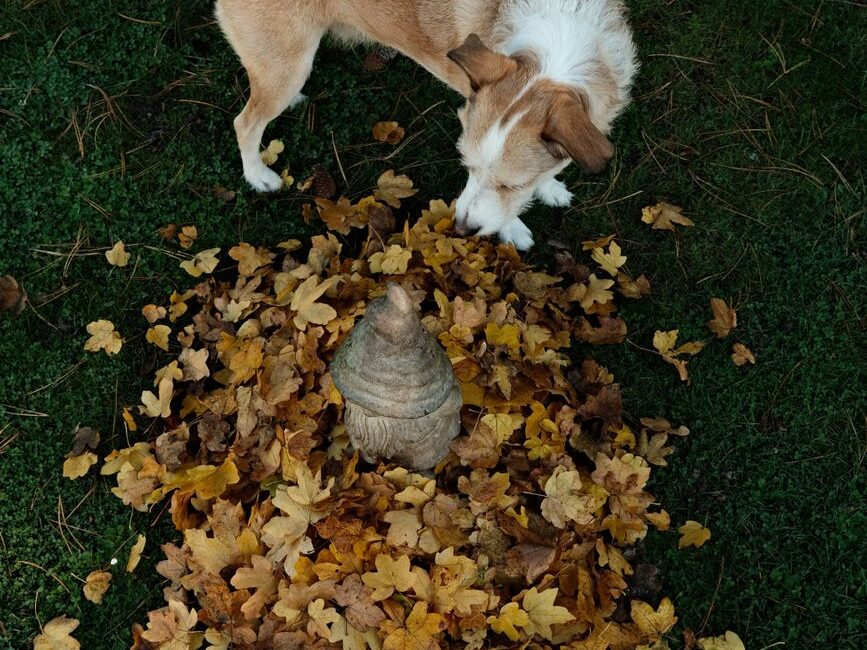
And sometimes the great seasonal event is that your dog stops to sniff the same spot for so long you begin to wonder whether you should introduce yourself to the people passing by.
You don’t have to turn every walk into an outing or abandon the routine that helps your day work. There are still appointments, school runs, work calls, and the practical reality that a walk can’t expand indefinitely just because the air feels kind. But when you have room, letting one loop take the time it takes can be a small, welcome change.
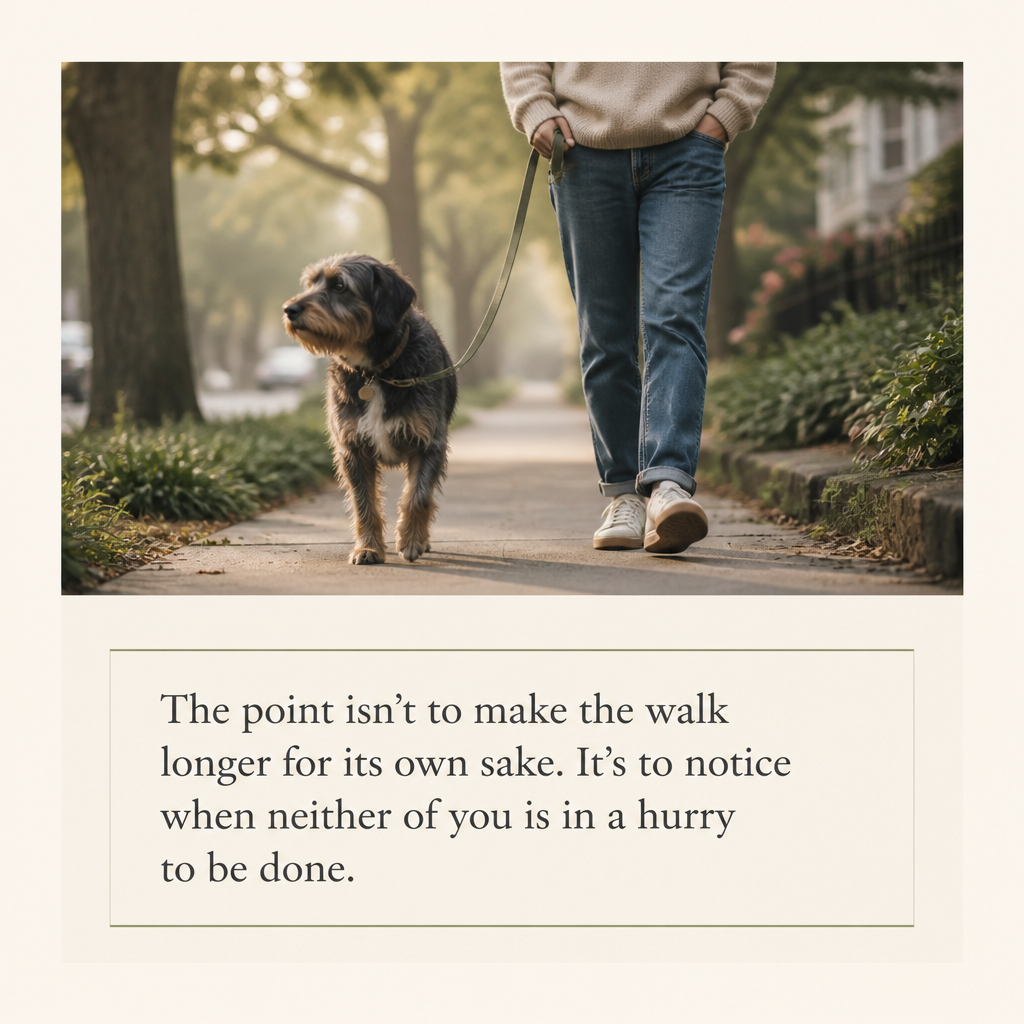
That might mean following your dog’s nose down the quieter side street instead of taking the shortest way home. It might mean standing still while they watch a bird hop out of reach, or letting them choose which familiar corner to visit first. The point isn’t to make the walk longer for its own sake. It’s to notice when neither of you is in a hurry to be done.
Of course, not every dog responds to a change in weather with a sudden appetite for exploration. Some still prefer the shortest route, a warm coat, or the option to turn back. A good walk doesn’t have to look like a grand expedition from the outside. Sometimes it is a brief sniff at the gate, a comfortable pace, and a pleased dog who knows exactly where home is.
But when your dog does slow down, there can be a quiet invitation in it. You came out to complete the walk. They came out to experience it. On a morning when the air feels good and the day has nowhere urgent to push you, those two plans can meet somewhere along the route.
Then, eventually, your dog turns toward home. You follow—perhaps a little later than intended, with colder coffee waiting inside and a leaf stuck to your shoe. The walk was meant to be quick. The dog had other ideas, and the morning was better for it.
Leave a Reply
You must be logged in to post a comment.