



There’s a particular kind of dog photo that makes you stop scrolling: one hopeful face, one paw resting just so on the edge of a kennel bed. The caption says the dog is waiting for a home. You feel the familiar tug—and then remember that your own home, schedule, finances, or resident pets may not have room for another dog.
That doesn’t make the feeling useless. And it doesn’t mean the only meaningful response is to adopt.
In the United States, October is observed as Adopt a Shelter Dog Month. The invitation can be wider than bringing a dog home: shelters and rescues may need foster homes, volunteers, donations, and help getting an individual dog’s story in front of the right person. The useful part is finding the kind of help that fits the life you actually have, not the one an idealized social post seems to assume.
Make one good introduction
Sharing a dog’s profile can feel almost too small to count. It takes a moment; it doesn’t require a spare room or a free weekend. But your share may reach someone who wasn’t looking at that shelter’s page: a friend of a friend, a neighbor who has been thinking about adopting, or a person who recognizes that a quieter, older dog would suit their household.
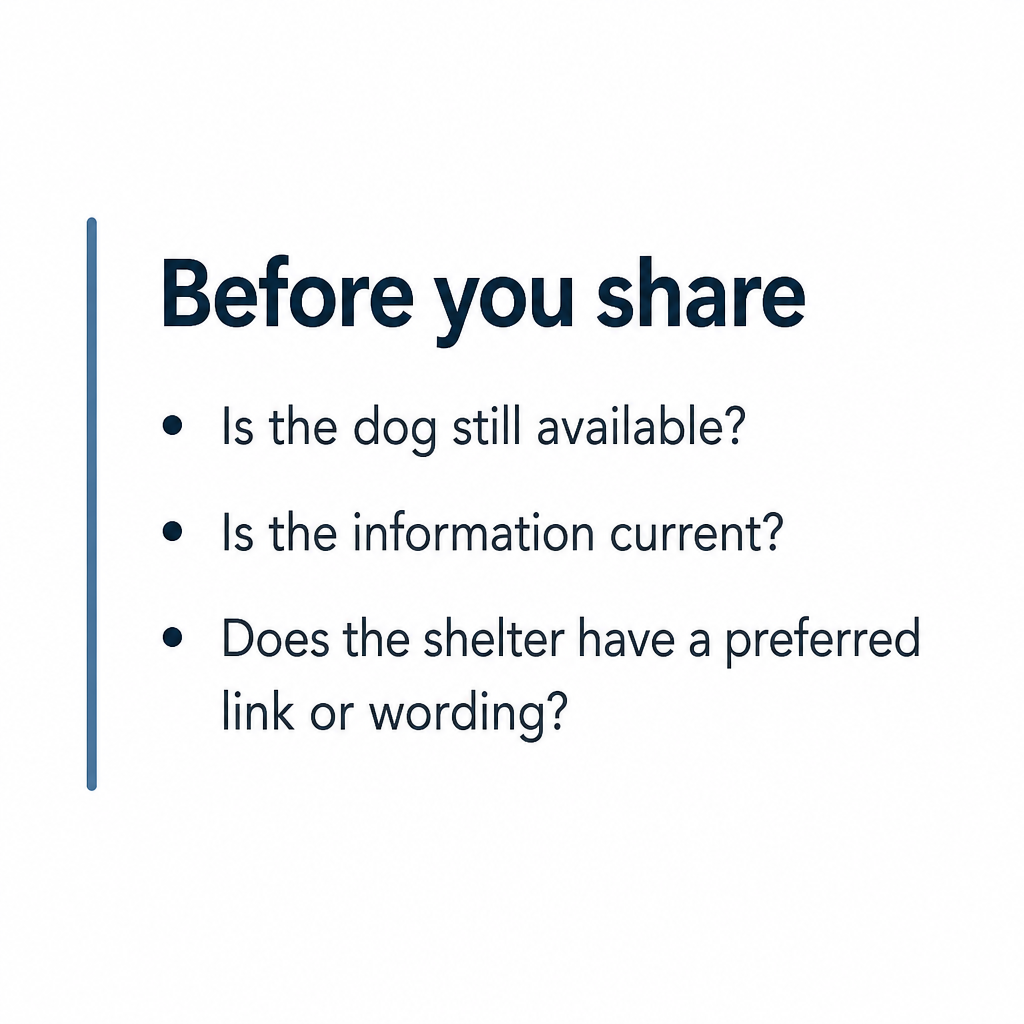
Give the original post a quick check before passing it along. Is the dog still available? Is the information current? Does the shelter have a preferred link or wording? If you add a note, keep it accurate and let the organization’s description do the important work. “Meet Maple—here’s her shelter profile” is more useful than inventing a backstory or promising she’ll be perfect for everyone.
And if the post doesn’t travel far, that isn’t a verdict on the dog—or on your sharing skills. You offered one more chance for the right person to see it. That is a modest thing, which is often what help looks like in real life.
Offer a little time, with a clear shape
“I’d love to help sometime” is generous, but it leaves the shelter with a puzzle to solve. A specific offer is easier to use: a regular volunteer shift, help at an adoption event, a few hours taking photos, or support with a task the organization has actually asked for.
The best fit may not be the task you pictured. Some people are happiest meeting dogs; others are better at washing bowls, sorting supplies, greeting visitors, answering emails, or making the event run on time. A shelter’s needs and volunteer process vary, so check what training, scheduling, and age requirements apply before you make plans. If you have limited time, say so. A small, dependable commitment can be kinder to everyone than an ambitious promise that quietly disappears beneath the laundry.
There are also ways to help that don’t involve entering a kennel area or handling dogs. Ask whether the organization needs event help, administrative support, photography, translation, transport coordination, or a hand sharing its current posts. The answer may surprise you; it may also simply be “not right now.” Both are useful things to know.
Fostering is a real commitment—and sometimes a temporary one
For someone who wants to help at home but isn’t ready to adopt, fostering can be a meaningful middle ground. A dog gets a break from shelter life and a chance to be seen in an ordinary setting: settling after dinner, discovering the suspicious noise of a washing machine, or learning that the sofa is apparently a place humans sit too.
It is still dog care, not a trial-size version of it. A foster dog needs time, attention, and a safe arrangement with the people and animals already in the household. The organization can explain what it expects, what support it provides, how long a placement might last, and what happens if the match isn’t working. Ask those questions before saying yes, especially if you rent, travel, have children, or share care with someone else.

And it’s fine if fostering isn’t right for you. The dog who needs a temporary home is not helped by a household agreeing under pressure and discovering too late that the arrangement cannot work. An honest no, paired with another kind of support, is a responsible answer.
Give what’s on the list, not what’s in the closet
A bag of food, a stack of towels, or a collection of toys seems like an easy win—until you learn the organization can’t use that particular food, has no storage for the towels, or needs laundry detergent more urgently. Needs differ, and they can change quickly.
Look for the shelter’s current wish list or ask what would be useful before starting a collection. If money is an option, even a small donation gives the organization room to put it toward a current priority. If it isn’t, that’s not a failure of generosity. A carefully shared profile, an hour at an event, or an offer to pick up a requested item can be just as real a contribution to the work.
Choose the kind of help you can repeat
It’s easy to imagine helping in one grand, camera-ready gesture. Most support is less cinematic: one accurate post, one shift that happens when promised, one box from the wish list, one foster placement with a clear plan. The dog’s life is not transformed by the drama of the gesture. What matters is that it meets a real need.
If you want to get involved this month, start with a local shelter or rescue and ask a simple question: “What would be most useful right now?” Then choose the answer that fits your circumstances. Maybe you can give a little time. Maybe you can help one dog’s profile find a wider audience. Maybe this year you can only pause, read, and remember that adopting is not the only way to care.
The right dog may eventually come home with someone who first saw a shared post, met them at an event, or heard about them through a foster family. You don’t have to be that person to be part of the path.

Leave a Reply
You must be logged in to post a comment.