

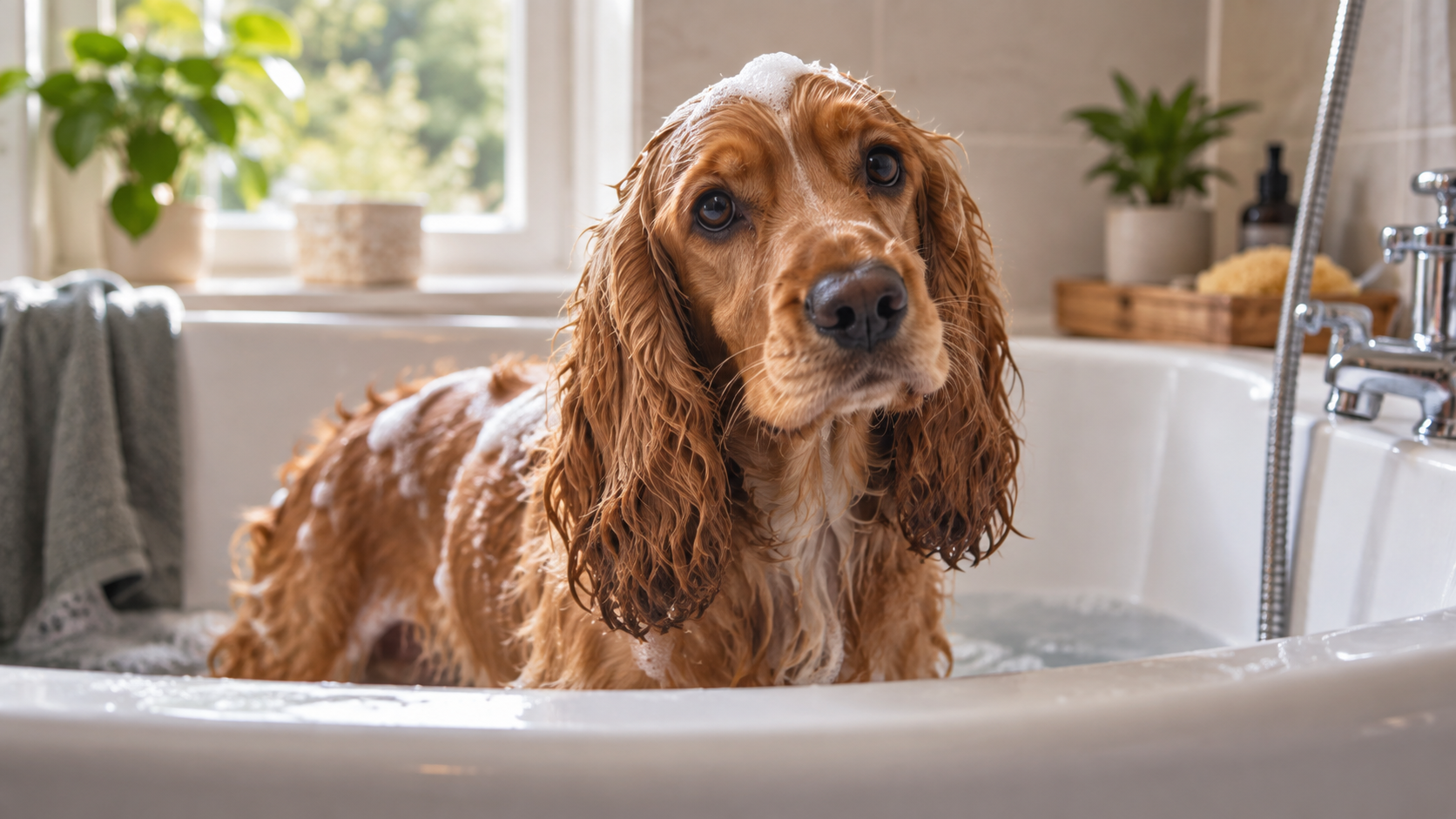
If your dog smells fine, looks clean and hasn’t recently discovered the irresistible joy of rolling in mud, you might be wondering whether it’s bath time at all.
The simple answer is that dogs don’t need to be bathed on one universal schedule. For many healthy dogs, several weeks may pass between baths. Others need bathing more regularly because of their coat, lifestyle or individual needs.
So instead of circling the same date on the calendar every month, it makes more sense to look at the dog standing in front of you.
How Often Do Dogs Really Need a Bath?
There isn’t a magic number that works for every dog.
A healthy indoor dog with a low-maintenance coat may stay perfectly clean for quite a while between baths. A dog that spends weekends charging through muddy trails, swimming or investigating every questionable smell in the neighbourhood is obviously going to need a different routine.
Think of a bathing schedule as a starting point, not a deadline.
Your dog may be ready for a bath when:
- their coat is visibly dirty or greasy;
- they have developed a noticeable doggy odour;
- they’ve been swimming or playing somewhere particularly dirty;
- something unpleasant has ended up in their coat;
- their normal grooming routine is no longer enough to keep them clean.
On the other hand, a dog who still looks, smells and feels clean doesn’t necessarily need to be shampooed simply because a certain number of weeks has passed.
The important exception is a dog with a skin condition or another medical reason for following a particular bathing routine. In that situation, the schedule recommended by your veterinarian takes priority over general bathing advice.
What Changes How Often Your Dog Needs a Bath?
Two dogs living next door to each other can have completely different bathing needs. Even two dogs in the same home can.
The biggest clues are usually their coat, what they do every day and the condition of their skin.
Coat Type Matters
A dog’s coat does much more than determine how much hair ends up on your sofa.
Different coat types hold dirt, moisture and natural oils differently, so the amount of bathing that works well for one dog may make little sense for another.
Long or dense coats can require considerable grooming to prevent dirt and tangles from building up. Double-coated dogs also rely heavily on regular brushing to remove loose hair and debris. Meanwhile, some dogs with very little or no hair can have their own specific skin-care needs.
That’s why coat care and bathing aren’t the same thing.
Your dog might need brushing several times between baths — and needing a brush doesn’t automatically mean they need shampoo too.
Lifestyle Can Change Everything
This is probably the easiest factor to judge because you already know exactly what your dog has been doing.
A mostly indoor dog whose greatest outdoor adventure is a walk around the neighbourhood is very different from a dog who regularly hikes, swims, digs or runs through wet fields.
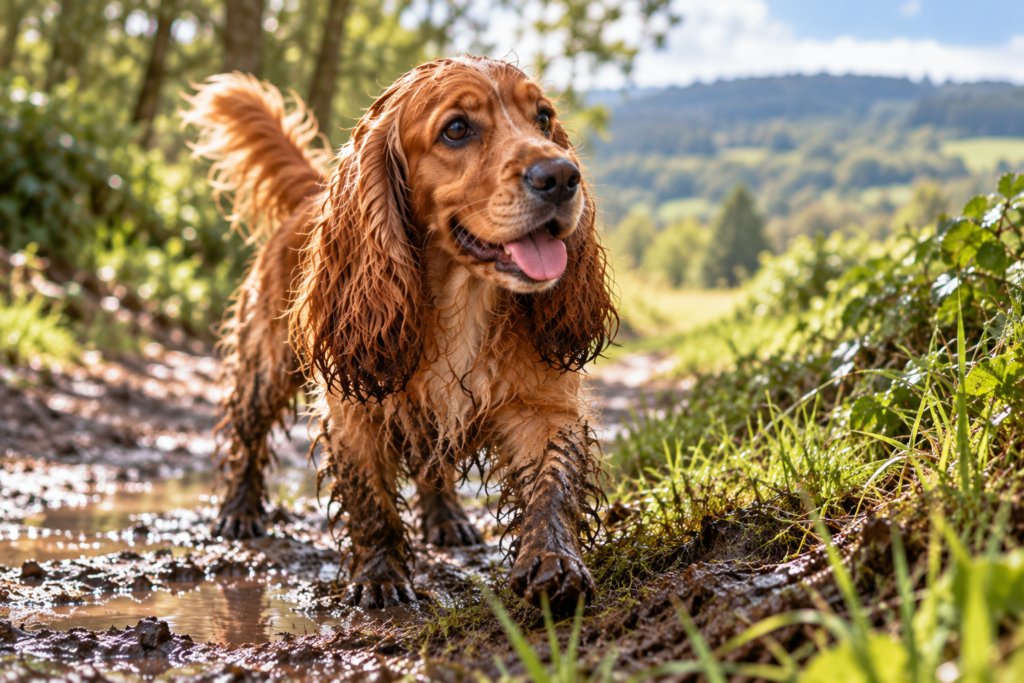
And then there are those special occasions when your dog proudly returns carrying a smell that leaves absolutely no room for debate.
That’s bath day.
Rather than trying to maintain a perfect calendar, adjust the routine to your dog’s real life. Some months may involve more baths than others, and that’s perfectly normal.
Your Dog’s Skin Has the Final Say
Healthy skin should always matter more than keeping a dog permanently shampoo-fresh.
Bathing too frequently — particularly with an unsuitable product — can contribute to dry or irritated skin. At the same time, some dogs with diagnosed skin conditions actually need more frequent bathing with products and schedules prescribed by a veterinarian.
Some skin conditions can require much more frequent bathing with medicated products. The Merck Veterinary Manual, for example, describes frequent medicated bathing as part of treatment for certain canine skin disorders.
Those situations are exactly why blanket rules such as “never bathe a dog more than once a month” aren’t particularly useful.
If your dog has persistent itching, redness, flaky skin, sores, an unusual smell or another recurring skin problem, don’t simply keep changing the bathing schedule in an attempt to fix it.
That’s something worth discussing with your veterinarian.
Can You Bathe Your Dog Too Often?
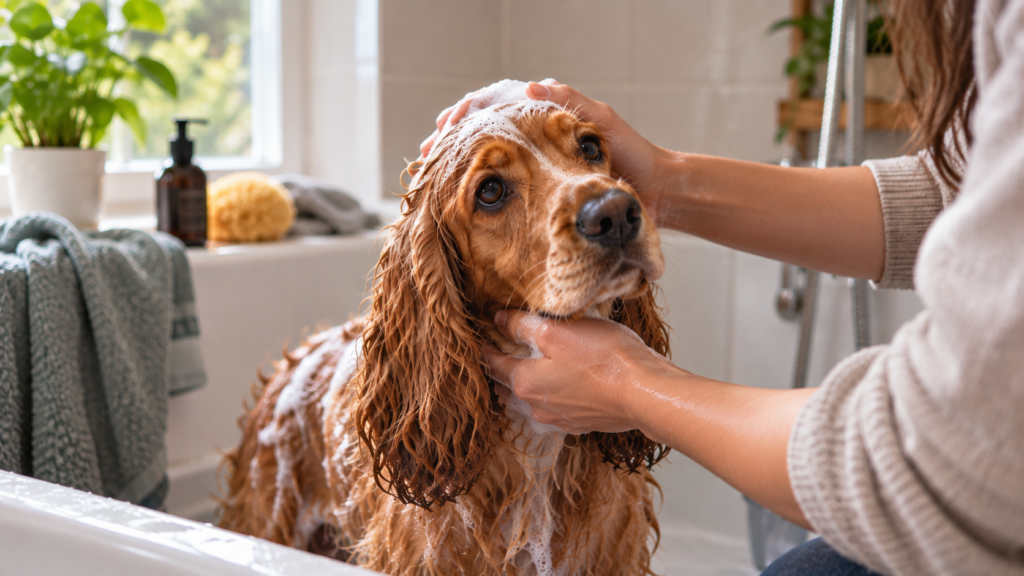
Yes — although “too often” isn’t the same frequency for every dog.
Bathing removes dirt, but shampoo also interacts with the skin and coat. Repeated bathing with an unsuitable product or a routine that doesn’t suit your dog can leave the skin dry or irritated.
That doesn’t mean frequent bathing is automatically harmful.
A veterinarian may deliberately recommend frequent baths for certain skin conditions, sometimes using a medicated shampoo as part of treatment. In those cases, the reason, product and schedule are very different from repeatedly shampooing a healthy dog simply because you want them to smell freshly bathed.
The useful rule is therefore not “never bathe more than X times.”
It’s this:
Bathe your dog when they need it, use a product appropriate for dogs, and pay attention to how their skin and coat respond.
If you’ve increased the frequency and start noticing dryness, flaking, redness or irritation, that’s a reason to reconsider the routine rather than reaching automatically for another bath.
What About Human Shampoo?
Your shampoo isn’t the best shortcut when the dog shampoo bottle is empty.
Human and canine skin aren’t identical, and products formulated for people aren’t designed around a dog’s skin and coat. For routine bathing, use a shampoo specifically formulated for dogs. The American Kennel Club also recommends using shampoo formulated specifically for dogs rather than products designed for human skin.
And if your dog has a diagnosed skin condition, don’t improvise with whatever happens to be in the bathroom. Use the product and bathing instructions recommended by your veterinarian.
Sometimes the most useful grooming tool is knowing when not to experiment.
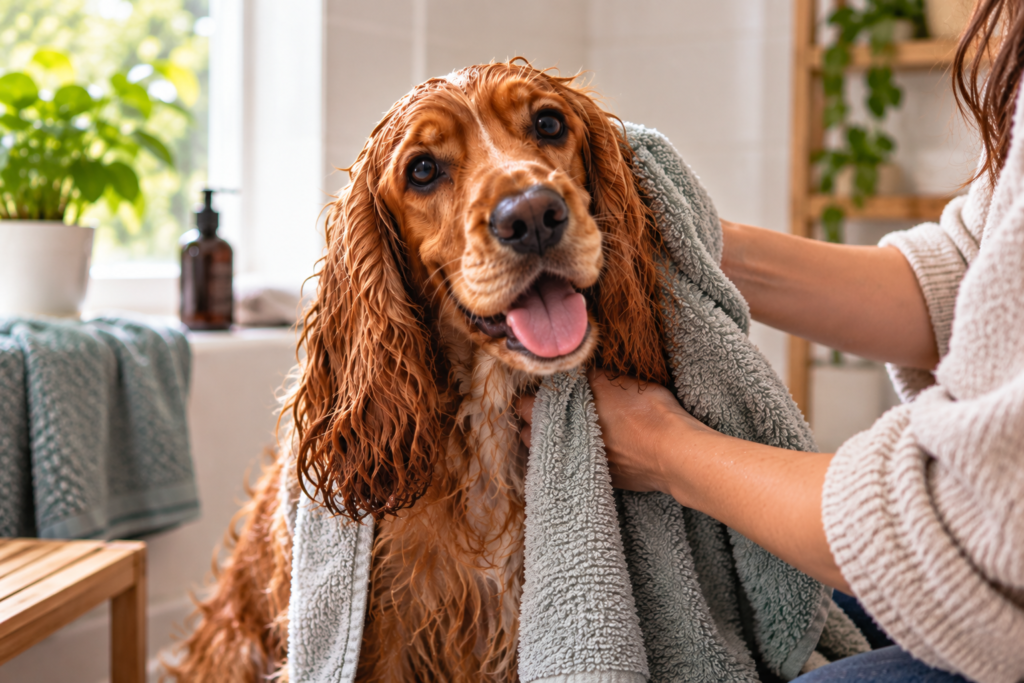
Keeping Your Dog Clean Between Baths
Not every dirty paw deserves a full bath.
A lot of everyday mess can be handled with basic grooming and targeted cleaning, allowing you to keep your dog comfortable without shampooing their entire body every time they come home looking slightly less respectable than when they left.
Brush Regularly
Brushing can remove loose hair, dirt and debris while helping you notice changes in the coat or skin.
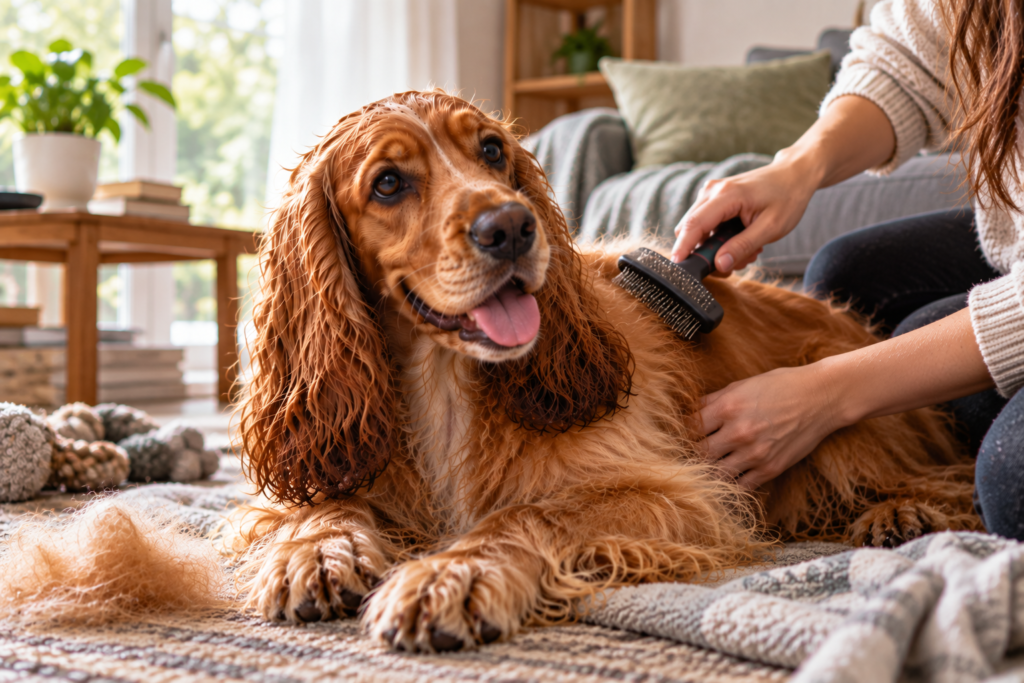
How often your dog needs brushing depends heavily on coat type. For some dogs it’s an occasional job; for others it’s a regular part of keeping the coat healthy and manageable.
Either way, brushing can do a surprising amount of the work between baths.
Deal With Muddy Paws Separately
Sometimes the dog is clean.
The paws are not.
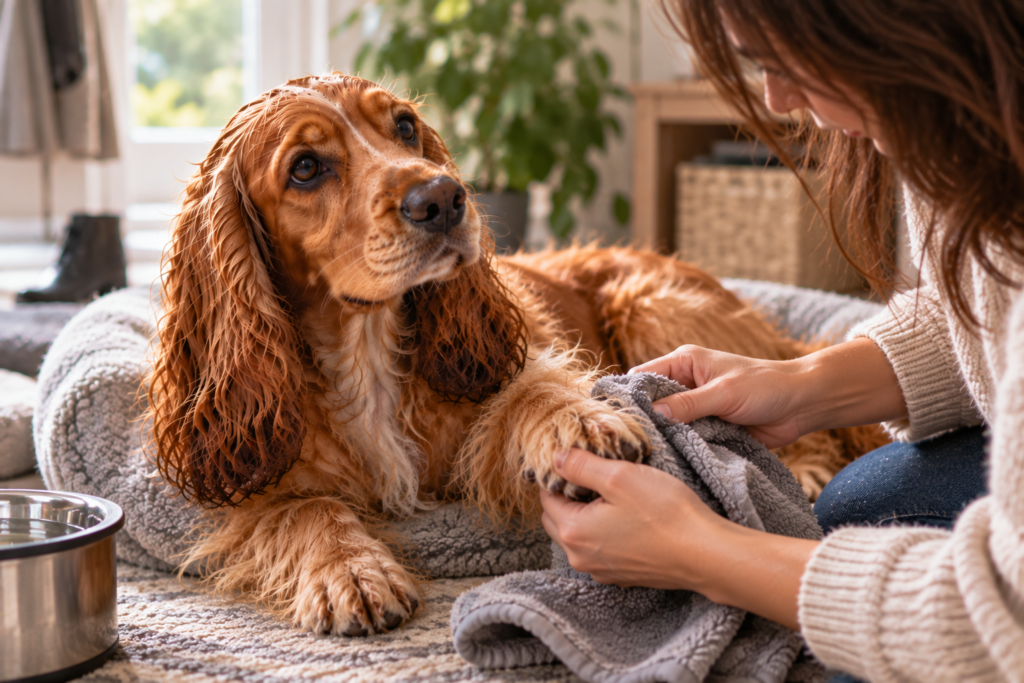
If a walk leaves your dog with muddy feet but the rest of their coat is fine, cleaning the paws may be all that’s needed. The same idea applies to small dirty areas that can be cleaned without turning the evening into full bath night.
This becomes especially useful during wet weather, when otherwise you could find yourself bathing a perfectly clean dog every few days simply because the ground refuses to cooperate.
Don’t Use Fragrance to Hide a Persistent Smell
A healthy dog will inevitably smell like a dog.
But a strong, unusual or persistent odour that returns quickly after bathing is different.
Repeatedly shampooing or covering the smell with fragranced products may hide it temporarily without addressing why it’s happening. Skin problems, ears and other issues can sometimes produce noticeable odours.
If something smells consistently wrong, particularly alongside itching, redness, discharge or discomfort, it’s worth finding out why.
When Bath Time Isn’t Really the Problem
Sometimes the question stops being “How often should I bathe my dog?” and becomes “Why does my dog need bathing so often?”
Pay attention when there’s a noticeable change from what’s normal for your dog.
That might include:
- persistent or increasing itching;
- red, inflamed or unusually flaky skin;
- sores, scabs or areas of hair loss;
- a strong or unusual odour that quickly returns;
- greasy skin or coat that repeatedly comes back;
- obvious discomfort when the skin is touched.
Those signs don’t tell you what the cause is — and they shouldn’t be used to diagnose your dog at home.
They simply tell you that another bath may not be the answer.
A veterinarian can determine whether there’s an underlying skin or health problem and, when appropriate, recommend a bathing schedule or treatment suited to that individual dog.
The Biscuit Theory Takeaway
So, how often should you bathe your dog?
As often as your individual dog genuinely needs it — not simply because the calendar says it’s bath day.
For many healthy dogs, that may mean several weeks between full baths. Some will need them more frequently because of their coat or adventures; others can comfortably go longer.
Watch the dog rather than the date.
Keep up with the grooming their coat needs, clean smaller messes without automatically reaching for the shampoo, use products made for dogs and pay attention to changes in their skin.
And if your dog celebrates the end of a bath by immediately finding the only muddy patch within a kilometre?
Unfortunately, no bathing schedule can protect you from that.
Frequently Asked Questions
How often should you bathe an indoor dog?
There isn’t a fixed schedule simply because a dog lives indoors. If their coat remains clean, their skin is healthy and they don’t develop a strong odour, an indoor dog may comfortably go several weeks or longer between baths.
Coat type, activity and individual skin needs still matter more than whether the dog spends most of the day inside.
Can I bathe my dog once a week?
Some dogs can be bathed weekly when there’s a genuine reason and the routine is appropriate for their skin. Dogs undergoing treatment for certain skin conditions may even be given a frequent bathing schedule by their veterinarian.
For a healthy dog, however, weekly bathing shouldn’t automatically be the default just to keep them smelling freshly shampooed. If you’re bathing that often, make sure there’s a reason for it and watch for dryness or irritation.
How often should a short-haired dog be bathed?
Short hair doesn’t automatically produce a specific bathing schedule.
Many healthy short-haired dogs with relatively clean lifestyles don’t require frequent full baths, but their activity level, skin condition and how dirty they actually get still matter.
The coat is one clue — not the entire answer.
Should I bathe my dog whenever they smell?
If the smell is simply the result of dirt, mud or an especially enthusiastic outdoor adventure, a bath may solve the problem.
A persistent, unusual or strong odour that returns soon after bathing deserves more attention. If it’s accompanied by itching, redness, discharge or other changes, repeatedly bathing the dog may mask the symptom rather than address the cause.
How often should you bathe a puppy?
Puppies don’t need baths simply because they’re puppies. Like adult dogs, they should be bathed when there’s a genuine need, while taking their age, coat and ability to stay warm into account.
Young puppies also need a gentle introduction to bathing rather than turning their first experiences into a wrestling match with the bathtub.
Puppy bathing has a few extra considerations of its own, so it’s a topic worth treating separately rather than squeezing an entire puppy-care guide into the adult bathing schedule.
Leave a Reply
You must be logged in to post a comment.