


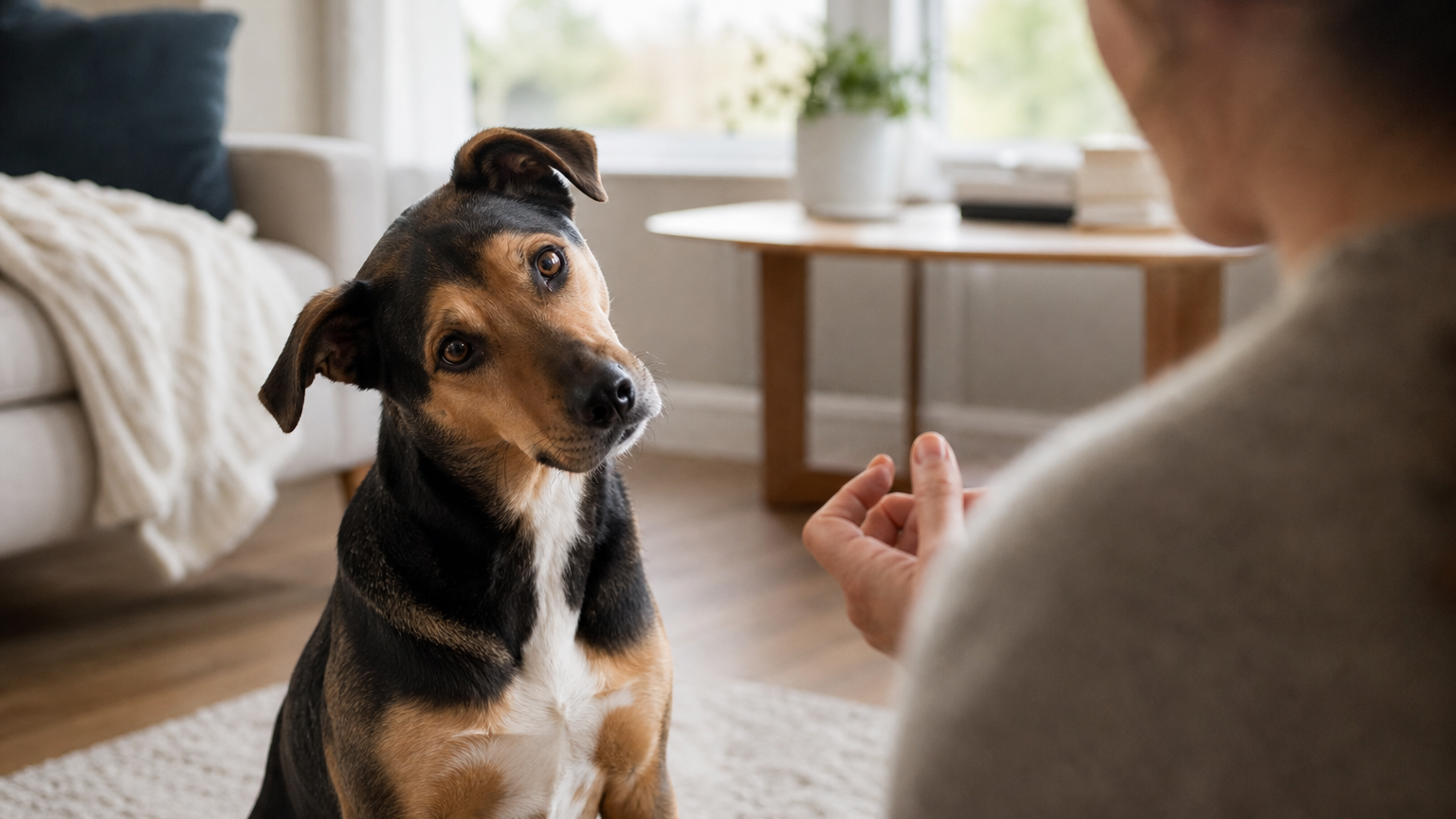
A quick head tilt when you say your dog’s name or make an unfamiliar sound is usually just part of a moment of attention. But there isn’t one proven explanation for every tilt: dogs may be reacting to a sound, focusing on something familiar, or responding to the way we talk to them. The important distinction is whether the tilt is brief and tied to a moment—or stays there when your dog is simply going about their day.
Why do dogs tilt their heads when you talk?
Dogs pay close attention to voices, tone, gestures, and familiar words. A tilt may happen as your dog listens or processes something that caught their attention. In a small study, researchers observed 40 dogs during a toy-naming task. The seven dogs known for learning toy names tilted their heads more often after hearing a familiar toy’s name than the other dogs did. The finding suggests a possible link between head tilting and processing meaningful sounds—but it doesn’t tell us exactly why most dogs tilt, or what any one tilt means.
You can read the researchers’ exploratory study of head tilting in dogs. Its small sample and specific task are good reasons to treat the result as a clue, not a universal explanation.
Is your dog trying to hear or see better?
That’s possible, but it hasn’t been established as the reason for the familiar, quick head cock. A dog’s head and ear position may change what they hear, and a muzzle can affect what they see from certain angles. Researchers and veterinary behavior experts have raised these ideas, but more evidence is needed to know how much they explain everyday head tilting.
It’s also easy to imagine that your dog has learned this pose gets a smile, a kind word, or a treat. People often respond warmly to a head tilt, but that doesn’t mean every dog is deliberately doing it for attention. The safest answer is that the behavior can have more than one explanation.
When is a dog’s head tilt normal?
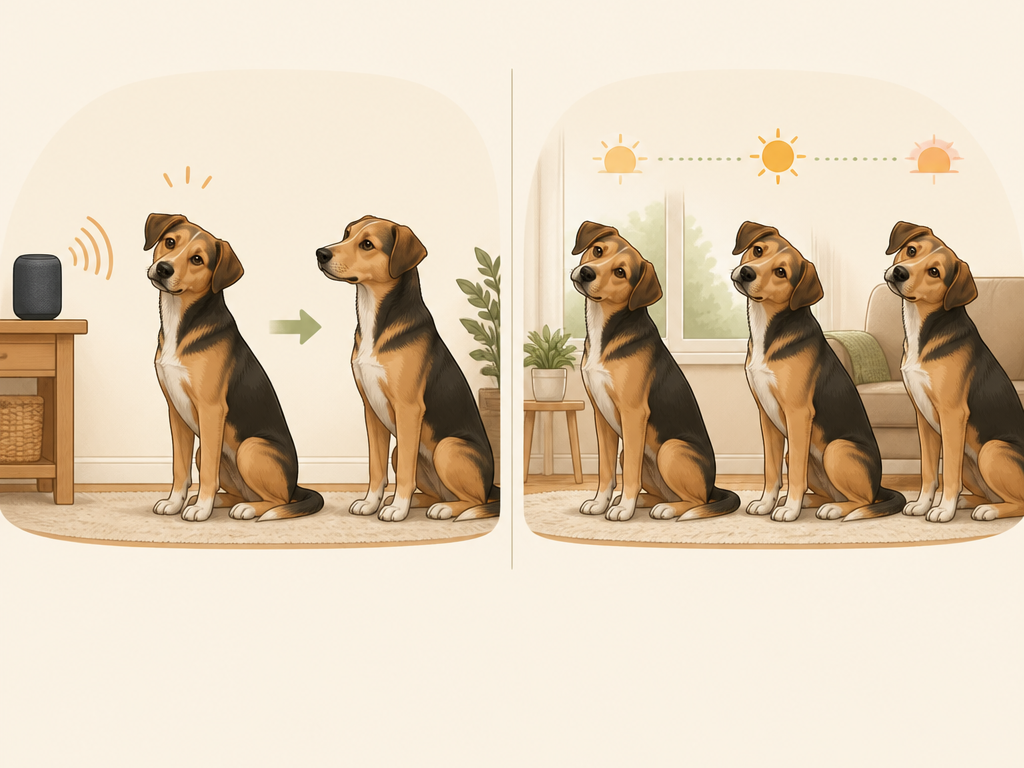
A brief tilt that appears while your dog is listening, then disappears as they move on, is different from holding their head at an angle continuously. If your dog otherwise seems comfortable, balanced, and like themselves, a momentary response to a sound or conversation is generally less concerning than a new tilt that persists without an obvious cue.
When should you call the vet?
A head tilt that is new and doesn’t go away deserves a prompt call to your veterinarian. A persistent tilt can be associated with problems affecting the ear or vestibular system—the system that helps with balance and coordination. A vet can assess what’s causing it; the tilt alone can’t tell you.
Seek urgent veterinary care if the tilt comes with trouble standing or walking, repeated falling, circling, sudden disorientation, vomiting, or rapid, unusual eye movements. These can occur with vestibular problems and other conditions that need assessment. The VCA overview of vestibular disease in dogs describes these signs and how veterinarians investigate them.
Until you’ve spoken with a vet, keep your dog away from stairs and other places where a balance problem could cause a fall. Don’t put ear drops or cleaners in their ears unless your veterinarian has advised you to.
The short answer
When a dog briefly tilts their head in response to your voice or a sound, they may be paying attention—but the exact reason isn’t settled. A tilt that stays in place, appears suddenly, or comes with balance or coordination changes is a different matter: contact your vet rather than assuming it’s just a cute quirk.

Leave a Reply
You must be logged in to post a comment.