


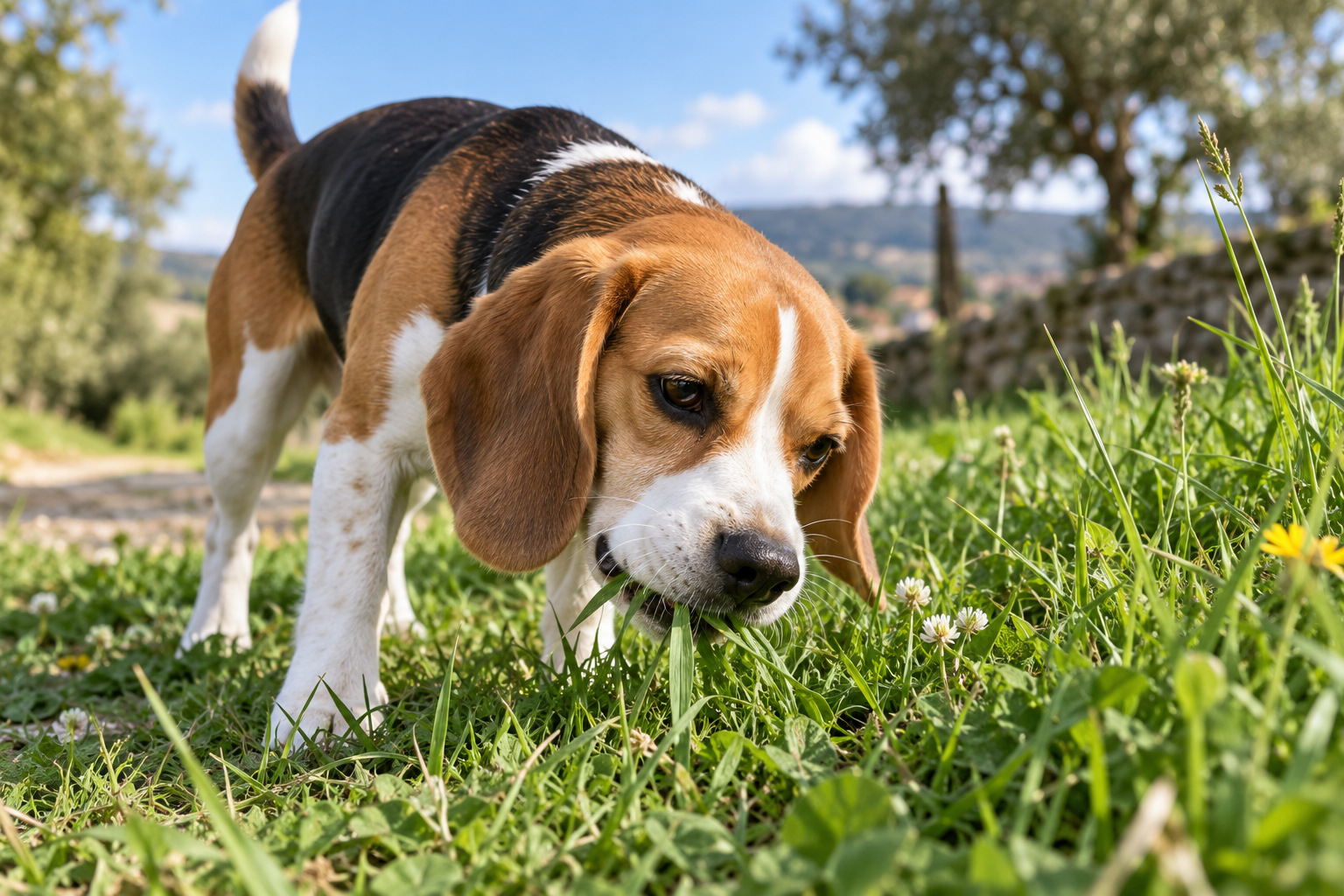
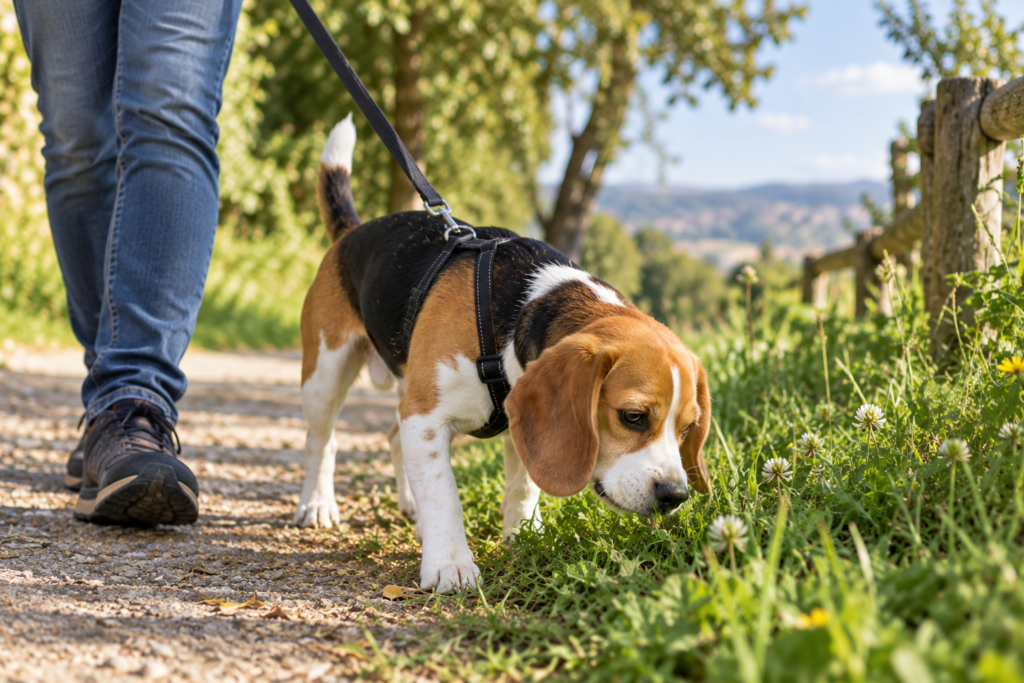
One minute your dog is enjoying a perfectly normal walk.
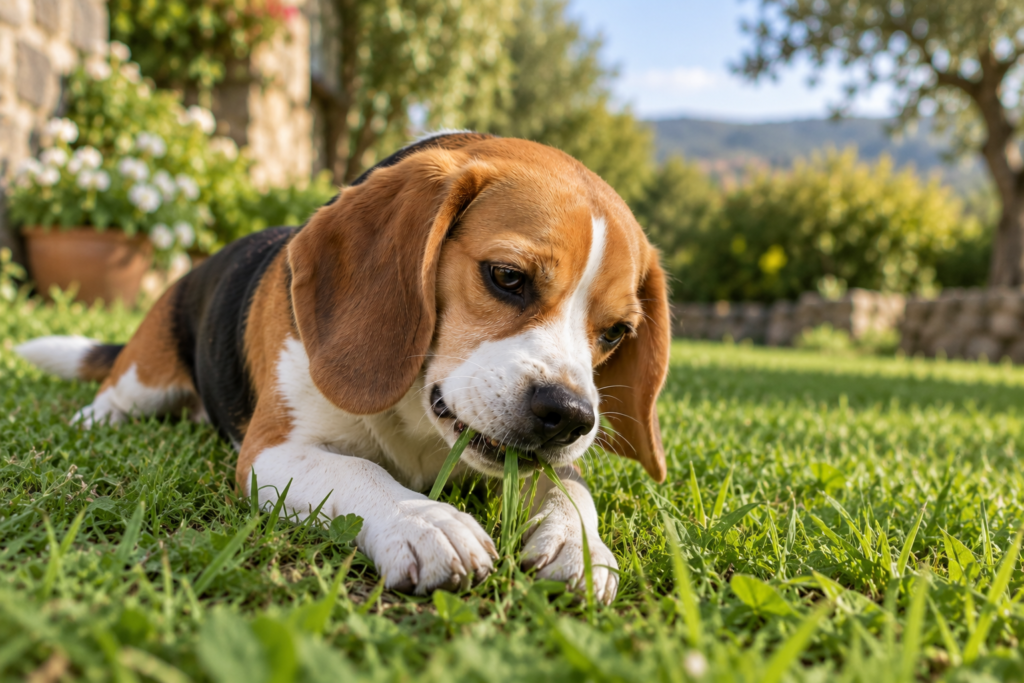
The next, they’ve stopped beside a patch of grass and started grazing like they’ve temporarily forgotten they’re a dog.
If this happens regularly, it’s easy to wonder whether they’re trying to tell you something. Are they feeling sick? Is something missing from their diet? Are they eating grass because they need to vomit?
The reassuring answer is that eating grass is very common in dogs and, in many cases, appears to be normal behaviour.
The less satisfying answer is that we still don’t know exactly why every dog does it.
There are several possible explanations — and understanding the difference between what we know and what we merely suspect can make your dog’s sudden interest in lawn maintenance much less mysterious.
Is It Normal for Dogs to Eat Grass?
For many dogs, yes.
Grass eating can look strange to us, but research suggests that eating plants is widespread among otherwise healthy dogs.
A 2008 study published in Applied Animal Behaviour Science investigated plant-eating behaviour in dogs. In one part of the research, 79% of a group of healthy dogs with daily access to plants had been observed eating grass or other plants.
The researchers then surveyed owners specifically about dogs that ate plants. Among 1,571 dogs included in that analysis, 68% were reported to eat plants daily or weekly, and grass was the plant they ate most frequently.
Perhaps more importantly, only 9% were reported to frequently appear ill before eating plants, while 22% frequently vomited afterwards.
That matters because it challenges one of the most familiar explanations for the behaviour: that a dog eating grass must have an upset stomach and is deliberately trying to make themselves vomit.
Some dogs certainly do eat grass around the time they’re unwell, and some vomit afterwards.
But that’s not the whole story.
For a healthy dog who occasionally stops to chew some grass and then carries on with their day as though nothing happened, the behaviour itself isn’t automatically a sign that something is wrong.
Why Do Dogs Eat Grass?
This is where things become more interesting.
There isn’t one scientifically proven explanation that applies to every dog. Several ideas may help explain the behaviour, and different dogs may have different reasons.
Sometimes, there may not be much of a mystery at all.
It May Simply Be Normal Dog Behaviour
One of the most useful findings from the research isn’t an exotic explanation for grass eating.
It’s how common the behaviour appears to be.
Plant material has also been documented in the feeding behaviour of wild canids, and researchers have considered whether plant eating may have some biological basis.
What we don’t have is evidence proving one specific evolutionary purpose that explains why your dog stops to nibble the lawn.
So we shouldn’t invent one.
For many dogs, eating vegetation may simply be part of their normal behavioural repertoire.
Sometimes grass is just grass.
They May Like the Taste or Texture
There’s also a wonderfully uncomplicated possibility:
Your dog may enjoy it.
Dogs explore their environment through smell, taste and their mouths, and some appear particularly interested in certain grasses or fresh growth.
Taste and texture are plausible explanations, rather than proven reasons for grass eating.
But that’s worth remembering too.
Not every behaviour needs to be solving a medical or nutritional problem. Your dog may simply find chewing grass interesting or satisfying.
Hunger, Diet and Fibre May Play a Role
There is some evidence that feeding can influence when dogs eat grass.
In one study, dogs given access to grass before and after a meal spent significantly more time eating it before they were fed. Grass-eating events were also more frequent before the meal than afterwards.
That’s interesting.
But it doesn’t prove that hunger explains grass eating in every dog.
Diet and fibre are also frequently suggested as possible explanations. There have even been individual cases in which plant eating changed following dietary changes.
Again, that’s very different from proving that dogs generally eat grass because they’re deficient in fibre.
Research into plant eating hasn’t established nutritional deficiency as the universal explanation, and grass eating by itself isn’t a reliable way to diagnose a problem with your dog’s diet.
If your dog eats a complete and balanced diet and otherwise appears healthy, don’t assume that a few mouthfuls of grass mean their food is nutritionally inadequate.
And don’t make major dietary changes based on grass eating alone.
Boredom May Sometimes Contribute
A dog with nothing particularly interesting to do may find their own entertainment.
Chewing grass could become one of those activities, particularly when a dog spends a lot of time outside with limited stimulation.
But boredom is another possible explanation, not a diagnosis.
Look at the wider picture.
If your dog gets appropriate exercise, opportunities to sniff and explore, social interaction and mental stimulation, yet occasionally munches grass during a walk, you don’t need to invent a boredom problem simply to explain it.
Context matters more than the behaviour in isolation.
Do Dogs Eat Grass Because They’re Sick?
Sometimes they might.
But seeing your dog eat grass doesn’t automatically mean they have an upset stomach.
In the 2008 study of plant-eating dogs, only a minority were frequently reported as showing signs of illness before eating plants. That makes it difficult to support the popular idea that most dogs are deliberately reaching for grass because they feel sick.
There is an important distinction here.
A dog who already feels nauseous or uncomfortable may behave differently and may eat grass.
That does not mean every dog eating grass is nauseous.
Watch what happens around the behaviour rather than focusing only on the grass.
A dog who casually eats a little grass and then continues walking, playing, eating and behaving normally presents a very different picture from a dog who suddenly starts consuming grass while also showing signs of discomfort.
The grass is only one clue.
Does Eating Grass Make Dogs Vomit?
It can happen.
But the sequence can be misleading.
Your dog eats grass.
Your dog vomits.
It seems perfectly logical to conclude:
The dog ate grass in order to vomit.
The problem is that one event happening before another doesn’t prove that the dog intended the second event to happen.
In the 2008 research, frequent vomiting after plant eating was reported in only a minority of dogs.
A dog may also already be experiencing gastrointestinal discomfort, eat grass and subsequently vomit. From the outside, it’s difficult to know whether the grass had anything to do with why the dog felt unwell in the first place.
So if your dog occasionally eats grass and happens to vomit, that doesn’t prove they’ve discovered their own canine version of an upset-stomach remedy.
What matters much more is whether vomiting becomes repeated, persistent or accompanied by other symptoms.
Is It Safe for Dogs to Eat Grass?
The behaviour may be normal.
The grass itself still deserves some attention.
A little ordinary grass may not be a problem for many healthy dogs, but not every patch of green ground is equally safe. PetMD also highlights potential risks from lawn chemicals and parasites that may be present where dogs graze.
Watch Out for Lawn Chemicals
Grass treated with herbicides, pesticides or other lawn products isn’t something you want your dog casually snacking on.
If you don’t know what’s been applied to an area, particularly on unfamiliar lawns or maintained public spaces, preventing your dog from eating there is the safer option.
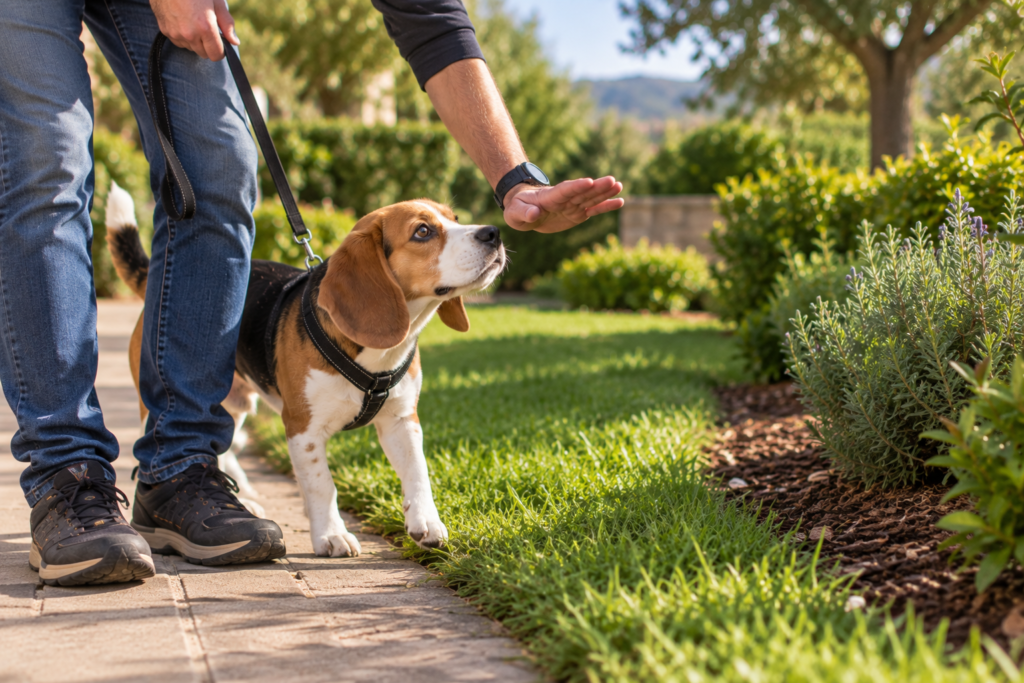
At home, follow the safety instructions for any lawn products you use and keep your dog away for the recommended period.
Grass Can Be Contaminated
Dogs aren’t the only animals visiting grassy areas.
Grass and the surrounding ground can be contaminated with faecal material from other animals, creating potential exposure to parasites and other unwanted organisms.
This doesn’t mean every blade of grass is dangerous.
It simply means that where your dog is grazing matters too.
A clean area you know well is different from the edge of a heavily used dog-walking route covered in mysteries best left uninvestigated.
Make Sure It Really Is Grass
A garden, field or roadside can contain far more than grass.
Some plants can be harmful or toxic to dogs, and your dog isn’t carrying a botanical field guide.
If you’re unsure what they’re trying to eat, don’t assume that something is safe simply because it’s green and growing from the ground.
Should You Stop Your Dog From Eating Grass?
Not necessarily.
If your dog is healthy, eats a little grass occasionally and shows no signs of illness, you don’t need to turn every attempt at grazing into an emergency intervention.
But neither do you need to encourage it.
Preventing access makes sense when you don’t know whether an area has been treated with chemicals, when other potentially harmful plants are present or when the ground may be heavily contaminated.
You may also want to interrupt the behaviour if your dog is eating large amounts, doing it compulsively or regularly becoming sick around the same time.
Rather than constantly pulling your dog away from every blade of grass, it can also help to redirect them towards something safer or more interesting.
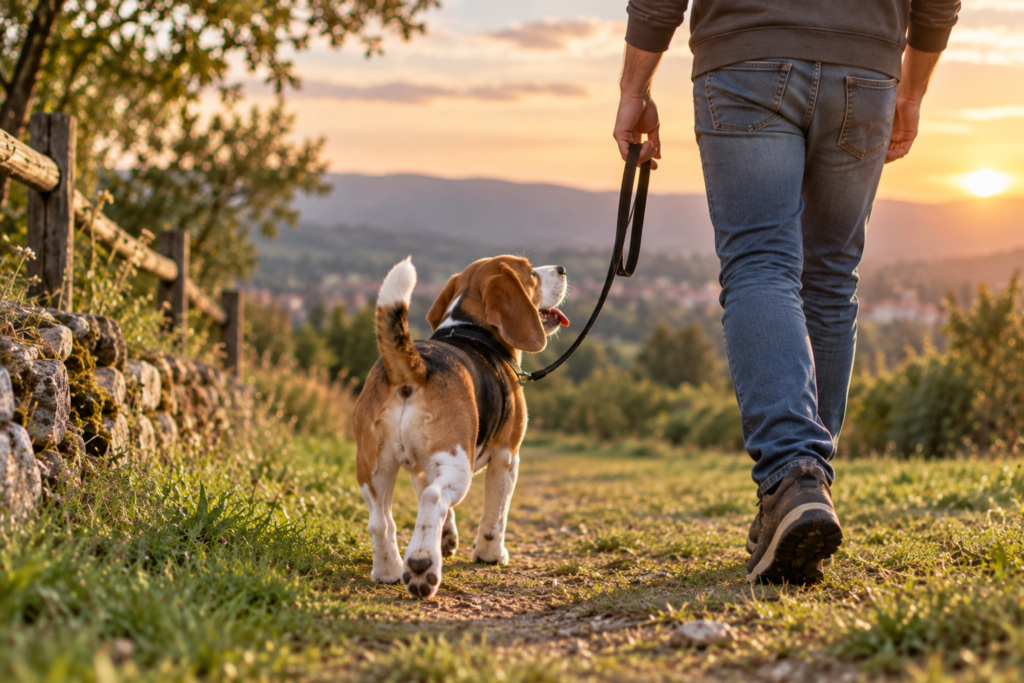
The goal isn’t to win a lifelong war against lawns.
It’s to understand when the behaviour is probably harmless and when the circumstances make it worth stopping.
When Should You Be Concerned?
The biggest clue is often not that your dog eats grass.
It’s that something has changed.
A dog who has casually nibbled grass for years and remains completely healthy is very different from a dog who suddenly begins eating large quantities and seems unwell.
Pay closer attention if grass eating occurs alongside:
- repeated or persistent vomiting;
- diarrhoea;
- loss of appetite;
- unusual tiredness or lethargy;
- abdominal discomfort or signs of pain;
- excessive drooling or other signs of nausea;
- a sudden, significant increase in grass eating;
- compulsive eating of grass, plants or other non-food items.
None of those signs tells you exactly what’s wrong.
And that’s the important part.
Don’t use grass eating to diagnose an upset stomach, nutritional deficiency, parasite problem or anything else at home.
If the behaviour has changed significantly or your dog is showing other symptoms, your veterinarian can assess the whole picture rather than trying to diagnose them from one unusual habit.
The Biscuit Theory Takeaway
So, why does your dog eat grass?
We don’t have one neat answer.
For many healthy dogs, occasional grass eating appears to be normal canine behaviour, and the available evidence doesn’t support the idea that dogs generally do it because they’re sick or deliberately trying to make themselves vomit.
Taste, texture, hunger, diet, environment or boredom may influence the behaviour in individual dogs. And sometimes a dog who genuinely feels unwell may eat grass too.
The trick is not to treat every mouthful of grass as a diagnosis.
Look at your dog.
Look at the circumstances.
And look for changes from what’s normal for them.
If they’re happily chewing a few blades before continuing their walk, you may simply have a dog doing something dogs have been doing for a very long time.
If they’re suddenly devouring the lawn while vomiting repeatedly and refusing dinner, the grass probably isn’t the most important part of the story.
Sometimes grass really is just grass.
Sometimes it isn’t.
Knowing your dog helps you tell the difference.
Frequently Asked Questions
Why does my dog eat grass and then throw up?
Some dogs do vomit after eating grass, but that doesn’t necessarily mean they ate it specifically to make themselves sick.
The dog may already have been experiencing digestive discomfort before eating the grass, and simply seeing one event follow the other doesn’t tell us why either happened.
An occasional episode in an otherwise healthy dog is very different from repeated vomiting. If your dog regularly vomits around the time they eat grass or shows other signs of illness, speak with your veterinarian.
Do dogs eat grass when their stomach hurts?
They can, but stomach discomfort doesn’t appear to explain grass eating in most dogs.
Research has found that only a minority of plant-eating dogs were frequently reported as showing signs of illness beforehand.
If your dog seems uncomfortable, is repeatedly sick or has other digestive symptoms, don’t assume the grass itself explains what’s happening.
Does eating grass mean my dog needs more fibre?
Not necessarily.
Fibre and diet have been proposed as possible influences on grass eating, but the behaviour alone isn’t evidence that your dog has a fibre deficiency.
If your dog is otherwise healthy and eating a complete and balanced diet, don’t change their food simply because they occasionally eat grass.
Why is my dog suddenly eating a lot of grass?
A noticeable change deserves more attention than an occasional habit that’s normal for your dog.
Consider what else has changed — their appetite, stools, energy, behaviour or environment.
If your dog suddenly begins eating large amounts of grass, particularly alongside vomiting, diarrhoea, loss of appetite, pain or lethargy, contact your veterinarian.
Should I let my dog eat grass?
Occasional grazing may not be a problem for a healthy dog, but where the grass is growing matters.
Avoid areas that may have been treated with lawn chemicals, heavily contaminated ground and places where potentially toxic plants are growing. If your dog eats grass compulsively, consumes large amounts or repeatedly becomes unwell around the same time, it’s worth discussing the behaviour with your veterinarian.
Why does my puppy eat grass?
Grass eating isn’t unusual in younger dogs. In the 2008 research, younger dogs were reported to eat plants more frequently than older dogs.
That doesn’t tell us exactly why puppies do it, and normal puppy exploration may also contribute to their interest in what’s growing around them.
Because puppies can be enthusiastic about putting things in their mouths, pay particular attention to the plants, lawn treatments and other material they can access.
Leave a Reply
You must be logged in to post a comment.