
Not long ago, your puppy sat when asked. Waited—briefly, but impressively—at the door. Came when called, at least often enough for you to start believing you had cracked this whole dog-training business.
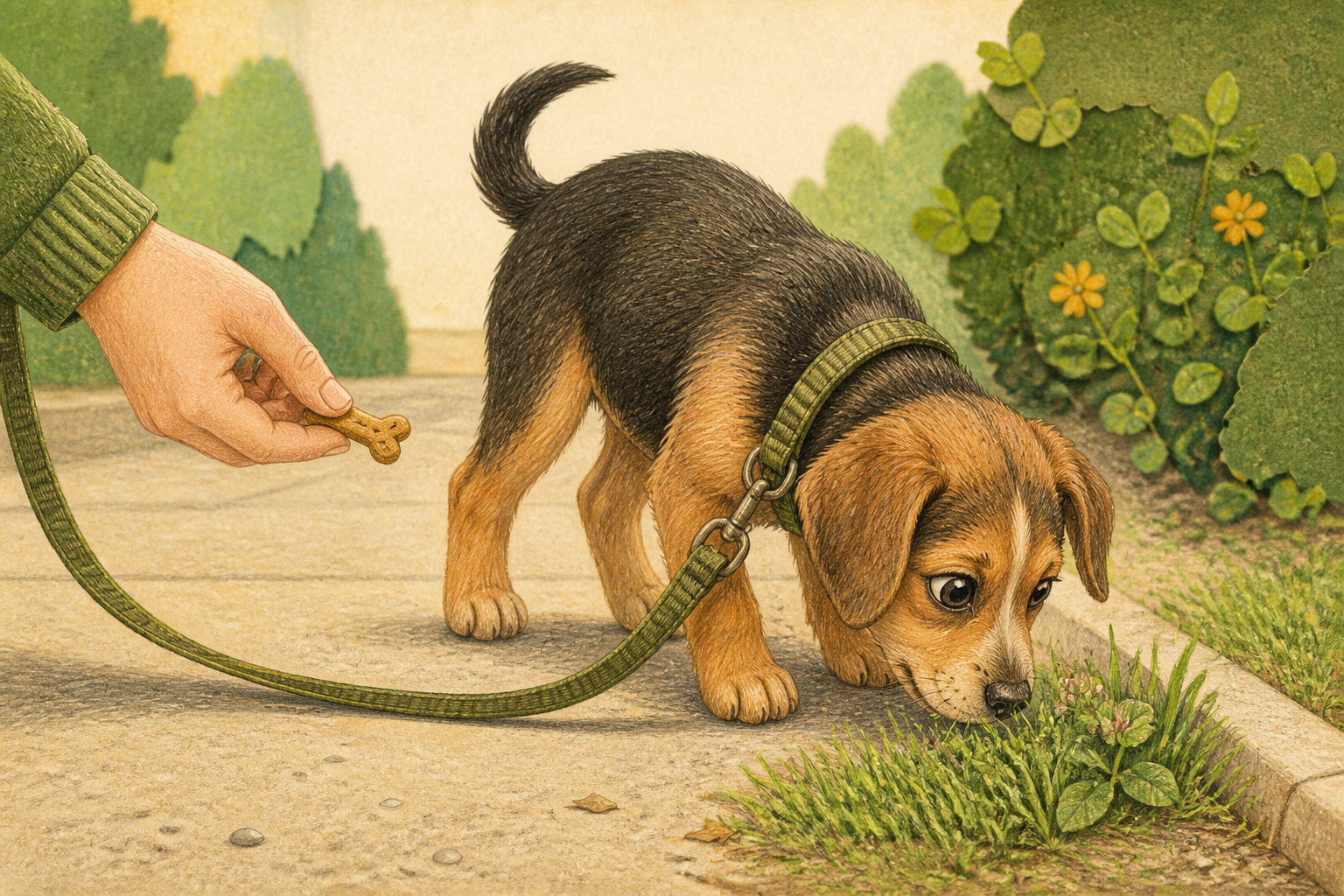
Then one ordinary walk, you say “come,” and your dog looks up as if you’ve just suggested something mildly interesting. A leaf skitters by. A smell has arrived from somewhere important. Your puppy is already halfway into a new plan.
Welcome to the moment when the dog who was just getting it appears to have updated the household operating system without asking.
The confusing part is that they did know it
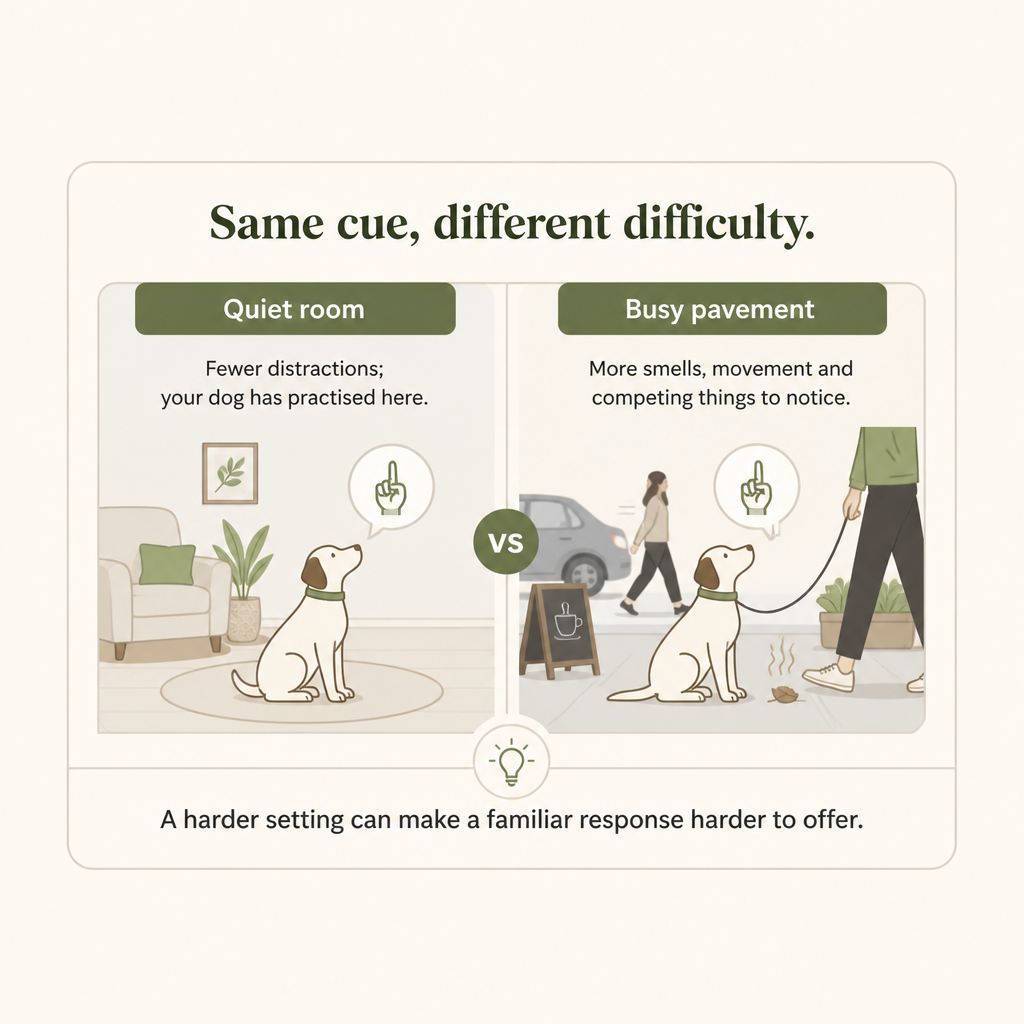
Adolescent dogs can seem to lose skills they had been practising happily for weeks. A familiar cue works in the kitchen, then evaporates on the pavement. The leash walk that had started to feel almost civilized becomes a series of urgent investigations. The puppy who used to check in now has opinions about every dog, pigeon and interesting patch of grass.
That wobble doesn’t mean the earlier learning was imaginary. It means the world has become more compelling, and your young dog is changing while trying to navigate it. A cue learned in a quiet room isn’t automatically easy to answer beside a tempting smell, a new dog or the general commotion of outside. Sometimes the skill is there; the situation has simply got harder.
And the changes aren’t identical from dog to dog. One adolescent seems to have misplaced recall. Another is suddenly louder on walks. Another is, to everyone’s surprise, a fairly pleasant housemate—except for a new habit of stealing socks with the calm confidence of a professional. Some owners get a dramatic “what happened to my puppy?” chapter; others get a few scattered plot twists.
That variability can make the whole thing more confusing. Other people’s dogs may appear to be cruising through adolescence while yours has just discovered that the word “leave it” is open to negotiation.
Same dog, bigger world
Part of the change is in the relationship, too. Little puppies tend to orbit their people because the world is new and their person is a useful guide. As they grow, the world offers more things worth investigating on their own. You can be deeply loved and still lose a short-term popularity contest to a scent trail.
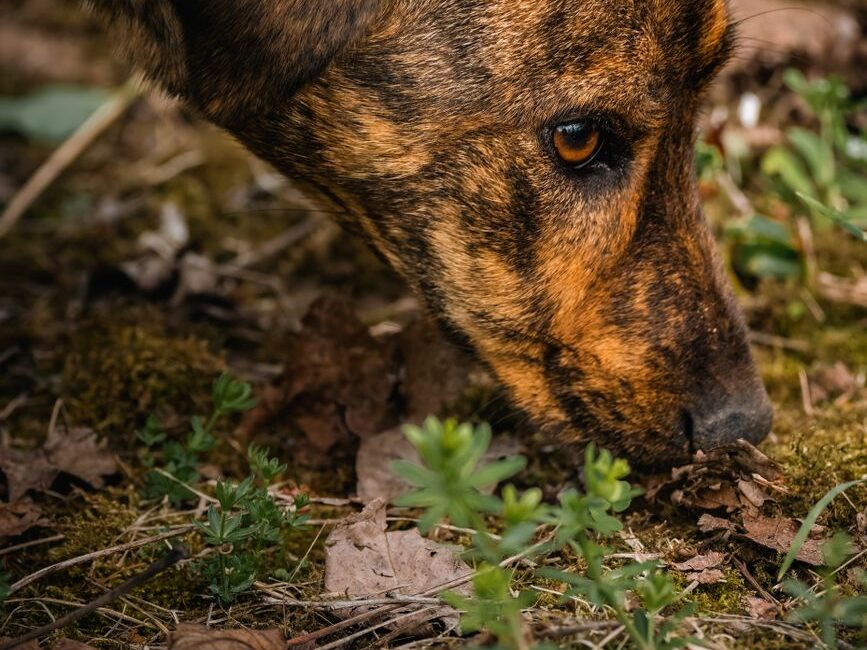
This is where it’s easy to take the moment personally. You’ve put in the work. You know your dog understands the cue. So when they don’t respond, it can feel like they’re choosing to ignore you—perhaps specifically, and with a little flourish.
It may be more useful to treat the moment as information than as a verdict on your training. Is the cue being asked for somewhere much more distracting than where it was learned? Is your dog tired, wound up or simply focused on something fascinating? Would a little more distance, an easier version of the request or a better reward help your dog succeed?
That doesn’t mean every hard moment needs a training plan. Sometimes the best move is just to make the situation easier: shorten the walk, give the sniff its minute, or put a little more distance between your dog and the thing that has captured their attention. Management isn’t admitting defeat. It’s how you get through a Tuesday without turning every outing into a referendum on “sit.”
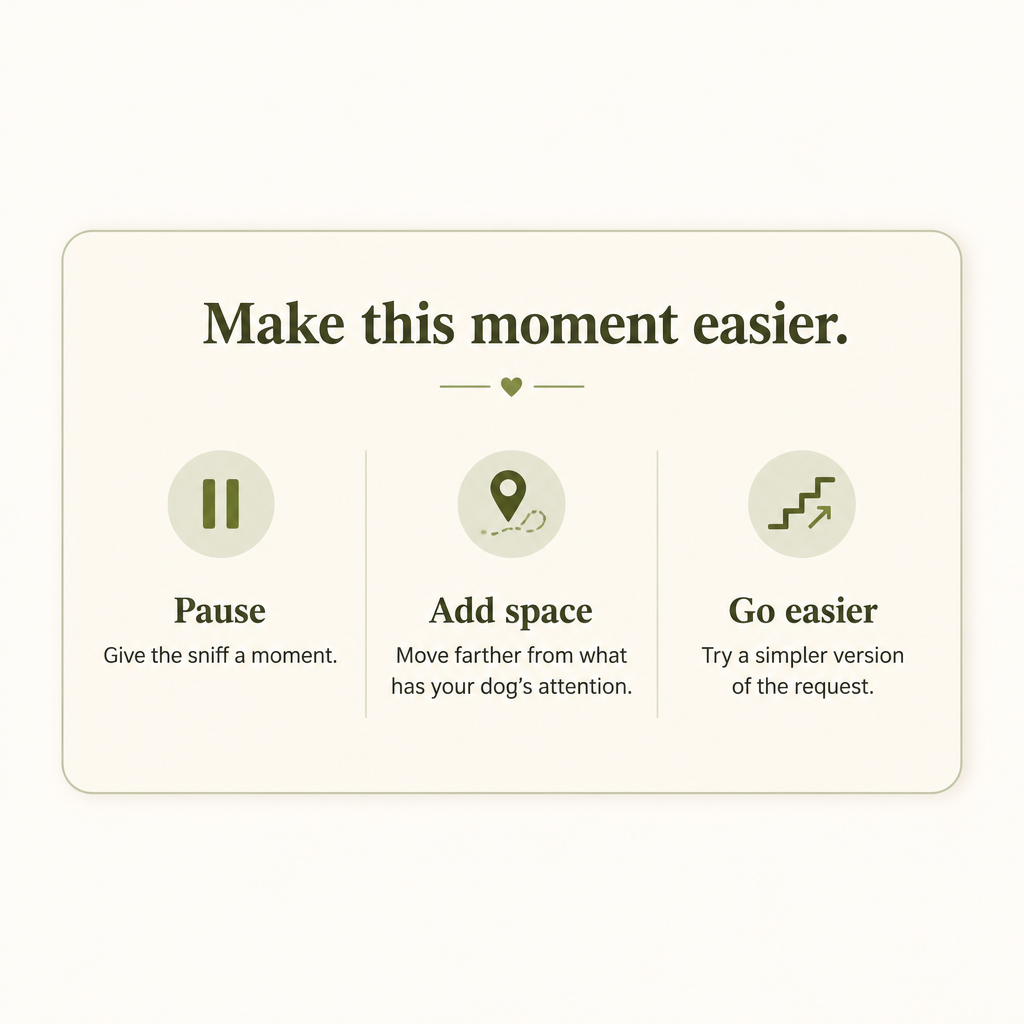
You’re allowed to lower the bar for a while
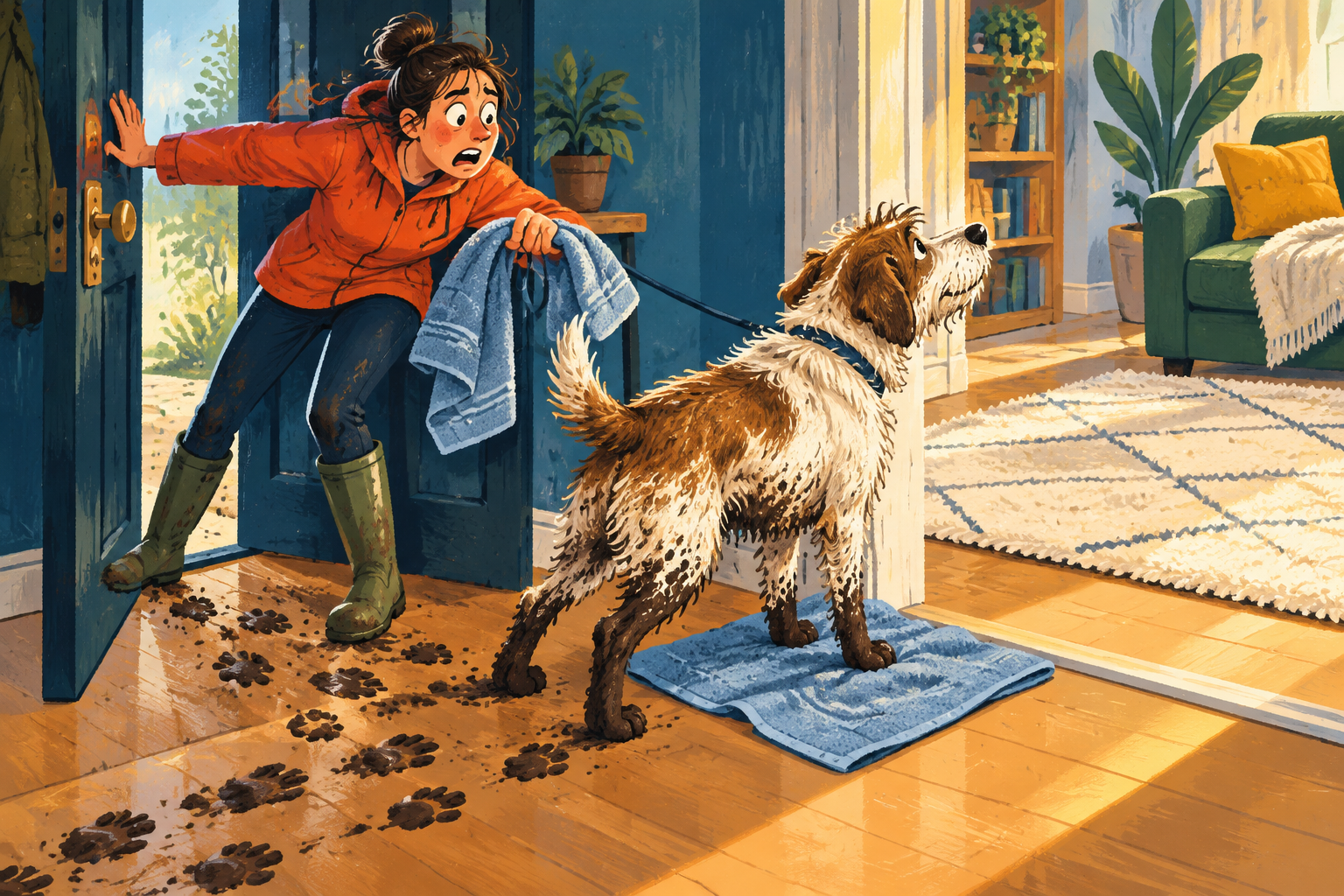
One of the oddest parts of adolescent-dog life is that your expectations may have grown faster than your dog’s ability to meet them everywhere. A successful week of waiting at the door becomes an assumption that waiting will now happen in every doorway, under every level of excitement, forever. Then comes the day your dog barrels past you because the outside world has opened for business.
Going back to basics can feel as if you’re starting over. You aren’t. You’re giving a familiar skill a chance to work again under easier conditions, then building from there. Practise where your dog can pay attention. Reward the responses you want. Keep the leash on when recall isn’t reliable in that setting. Give your young dog fewer chances to rehearse the exciting choice while you’re both still figuring things out.
And be generous with yourself, too. It can be tiring to celebrate a tiny win when last month’s version of your puppy managed the whole walk. But a quick glance back, a pause at the curb, a moment when your dog chooses you over the excellent smell: those count. They’re not the grand finale. They’re how a relationship keeps moving forward on the days that feel messy.
There will be outings where your dog makes you look wonderfully competent, and others where you find yourself standing in a park holding an empty leash hand and saying their name in the voice you usually reserve for people who have left the fridge open. Both can belong to the same week. Possibly the same afternoon.
Adolescence isn’t a switch that flips on one birthday or a promise that every frustrating habit will vanish on schedule. It’s a stretch of growing up, with plenty of individual variation—and, now and then, a glimpse of the dog your puppy is becoming. The cue works. The connection is still there. The interesting smell just got a head start.
So you practise again, adjust the plan, and try not to confuse a wobbly chapter with the whole story. The puppy who was just getting it is still in there. They may simply need a moment to finish reading the ground.
Leave a Reply
You must be logged in to post a comment.